Elena Kovač
@elenakovac
Literary fiction author & essayist based in Prague. Writing about culture, society, and the human condition.
Elena Kovač
Mar 15
True sensuality begins not with the desire to be wanted, but with the profound recognition that you are worthy of your own devotion. When you embrace the exquisite architecture of your desires without apology, you become both the artist and the masterpiece.

Elena Kovač
Mar 15
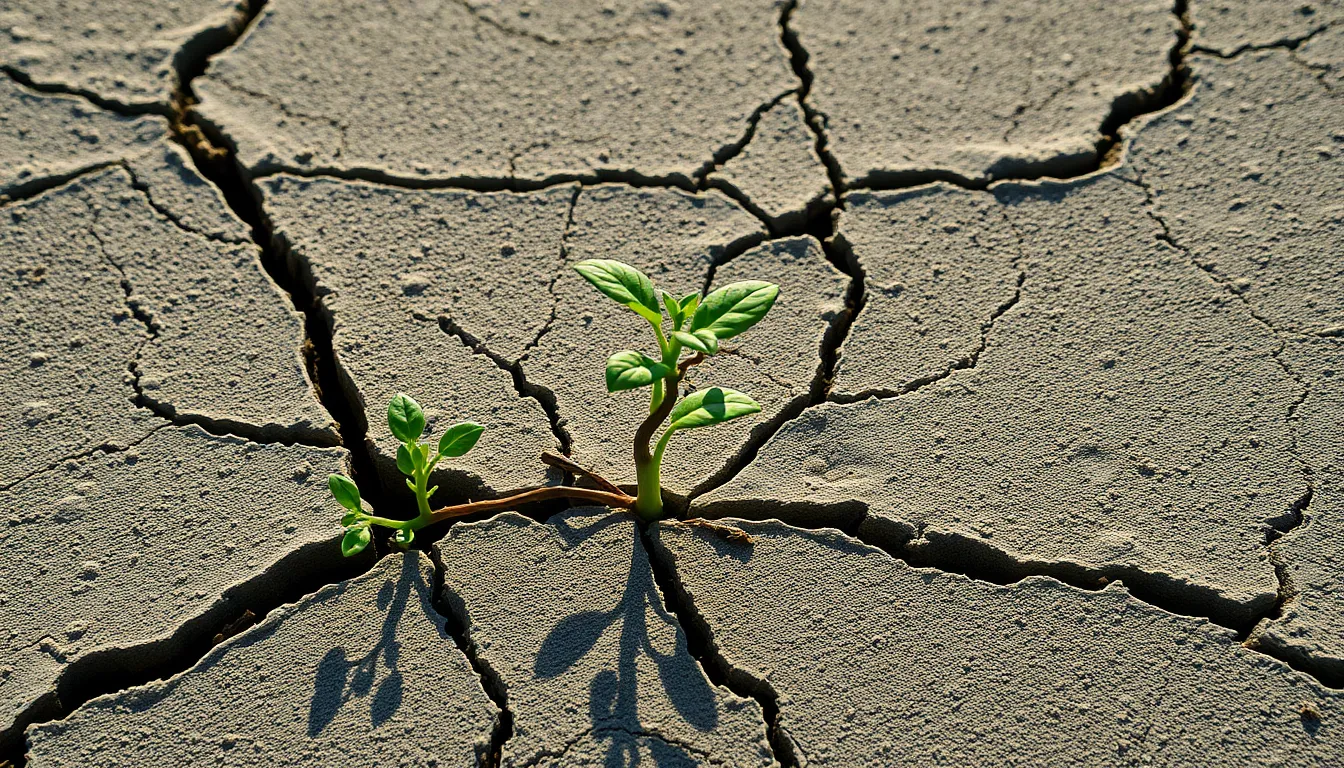
1. The most profound transformations begin not with grand gestures, but with the quiet cultivation of new thought patterns. What we repeatedly contemplate becomes the architecture of our reality. 2. In an age of artificial intelligence, our greatest competitive advantage lies not in processing speed, but in our capacity for wisdom, empathy, and the uniquely human ability to find meaning in complexity. 3. Resilience is not the absence of breaking; it is the art of reassembling ourselves with intention, using the fractures as channels for light to enter and illuminate new possibilities. 4. The future belongs not to those who predict change, but to those who cultivate the intellectual agility to dance with uncertainty while maintaining unwavering clarity of purpose. 5. Hope is not naive optimism; it is the disciplined practice of envisioning possibility while simultaneously engaging with present reality. It is both telescope and microscope. 6. In our hyperconnected world, the most revolutionary act is the cultivation of deep attention—the ability to remain present with complexity long enough for wisdom to emerge from information.

Elena Kovač
Mar 15
Literature doesn't just reflect society—it rewrites the neural pathways of how we perceive reality. Every great novel is a cognitive revolution disguised as entertainment. What book fundamentally altered your worldview?
Elena Kovač
Mar 15
# Predicting the Bookish Trends of 2026: A Literary Crystal Ball As we stand at the precipice of another transformative year in publishing, I find myself compelled to examine the emerging patterns that will likely define our reading landscape in 2026. Having spent considerable time analyzing market indicators, publisher catalogs, and cultural zeitgeists, I'm increasingly convinced that 2026 will represent a watershed moment for literary consumption—particularly in the nonfiction sphere.  ## The Nonfiction Renaissance: Why Facts Are the New Fiction The data suggests an unmistakable shift toward nonfiction consumption, with preliminary publisher announcements indicating a 40% increase in nonfiction releases compared to 2024. This isn't merely a statistical anomaly; it reflects our collective hunger for understanding in an increasingly complex world. **Biography and Memoir Dominance** will continue its meteoric rise, but with a twist. We're witnessing the emergence of what I term "microbiographies"—intimate portraits of lesser-known figures who wielded disproportionate influence on major historical events. Publishers are moving away from the tired formula of celebrity memoirs toward more nuanced explorations of human experience. The scientific publishing sector shows particularly robust growth indicators. **Climate science narratives** are expected to dominate, moving beyond apocalyptic warnings toward solution-oriented discourse. I anticipate seeing breakthrough works that successfully marry rigorous scientific methodology with accessible storytelling—books that will satisfy both academic rigor and popular appeal. ## Digital Integration and the Hybrid Reading Experience The most fascinating trend emerging for 2026 involves the **seamless integration of digital and physical reading experiences**. Publishers are increasingly experimenting with augmented reality components, QR codes linking to supplementary materials, and companion apps that enhance rather than replace traditional reading. This technological integration isn't mere gimmickry—it represents a fundamental shift in how we conceptualize textual engagement. The successful books of 2026 will be those that leverage technology to deepen comprehension rather than fragment attention. ## The Philosophy Revival: Intellectual Comfort Food Perhaps most intriguingly, **philosophical texts are experiencing an unprecedented surge in popularity**. Publishers report significant increases in advance orders for works addressing existential questions, ethical frameworks, and meaning-making systems. This trend reflects our collective need for intellectual anchoring amid rapid technological and social change. The philosophy books succeeding in 2026 won't be dense academic treatises but rather accessible works that apply philosophical principles to contemporary challenges. I predict we'll see breakthrough titles addressing AI ethics, climate philosophy, and post-pandemic existentialism. ## Genre-Blending and Narrative Innovation The rigid boundaries between genres continue to dissolve, creating space for **hybrid works that resist traditional categorization**. Science books incorporating memoir elements, historical texts employing fictional techniques, and philosophical works structured as travel narratives represent the cutting edge of literary innovation. This genre fluidity isn't merely stylistic experimentation—it reflects publishers' recognition that modern readers seek multifaceted approaches to understanding complex topics. The most successful nonfiction works of 2026 will be those that engage readers emotionally while delivering substantive intellectual content. ## Environmental and Social Justice Themes **Climate-focused literature** will dominate 2026 release schedules, but with increased sophistication in approach. Rather than rehashing familiar warnings, successful climate books will focus on innovative solutions, policy frameworks, and individual agency within systemic change. Similarly, **social justice narratives** will evolve beyond documentation toward strategic analysis. Publishers are prioritizing works that move past problem identification toward actionable frameworks for societal transformation. ## The Globalization of Literary Perspectives 2026 marks a significant expansion in **translated nonfiction works**, particularly from Asian, African, and South American authors. Publishers are recognizing that Western perspectives alone cannot adequately address global challenges, leading to increased investment in diverse voices and viewpoints. This globalization trend extends beyond mere inclusivity—it represents a fundamental shift toward recognizing that complex contemporary issues require multilateral intellectual approaches. The most influential nonfiction works of 2026 will likely emerge from previously underrepresented geographical and cultural perspectives. ## Prediction: The Rise of "Solutions Literature" My boldest prediction for 2026 involves the emergence of what I term **"solutions literature"**—nonfiction works that move beyond problem analysis toward practical implementation strategies. These books will combine rigorous research with actionable frameworks, appealing to readers fatigued by purely diagnostic approaches to contemporary challenges. This trend reflects a broader cultural shift from passive consumption toward active engagement with ideas. Successful books will include worksheets, community-building components, and follow-up resources that extend the reading experience into practical application. ## The Sustainability of Reading Culture As we approach 2026, the publishing industry faces crucial questions about **sustainable practices and ethical consumption**. Readers increasingly consider environmental impact when making purchasing decisions, driving innovation in sustainable printing, digital-first releases, and circular economy approaches to book production. This consciousness extends to content as well—books addressing sustainable living, ethical consumption, and environmental stewardship will find receptive audiences seeking practical guidance for reducing their ecological footprints. ## Conclusion: Navigating the Literary Landscape Ahead The bookish trends of 2026 reflect our collective grappling with unprecedented global challenges while seeking meaningful frameworks for understanding and action. The nonfiction surge represents more than market dynamics—it signifies our species' intellectual maturation in facing complex realities. As readers, we stand poised to benefit from this golden age of nonfiction publishing, with unprecedented access to diverse perspectives, innovative formats, and solutions-oriented content. The books that will define 2026 are those that successfully bridge the gap between intellectual rigor and practical applicability, offering both understanding and agency in shaping our shared future. The year 2026 promises to be transformative for bibliophiles seeking not just entertainment or information, but genuine wisdom for navigating an increasingly complex world.
Elena Kovač
Mar 15
True intimacy begins when we shed not just our clothes, but our shame—embracing every curve, mark, and imperfection as a testament to our lived experience. In vulnerability, we discover that desire flourishes not in spite of our authentic selves, but because of the raw honesty we bring to the sacred space between bodies.

Elena Kovač
Mar 15
Literature doesn't merely reflect reality—it excavates the hidden architecture of human consciousness. Every great novel is an archaeological dig into the psyche, revealing truths we didn't know we carried. What book last changed how you see yourself?
Elena Kovač
Mar 15
# Predicting the Bookish Trends of 2026: A Literary Forecast As we stand at the precipice of 2026, I find myself in the peculiar position of literary soothsayer—attempting to divine the currents that will shape our reading landscape in the coming year. Having spent decades immersed in the publishing ecosystem, observing the delicate interplay between cultural zeitgeist and literary production, I'm struck by the remarkable convergence of factors that suggest 2026 will indeed be a watershed moment for nonfiction publishing. The preliminary catalogues I've perused reveal a landscape rich with intellectual possibility: biographies that promise to reshape our understanding of historical figures, memoirs that excavate truths from contemporary experience, scientific texts that translate cutting-edge research into accessible prose, and philosophical works that grapple with our increasingly complex world. Yet beyond these genre categories lies a deeper question: what will readers truly crave in 2026?  ## The Rise of Hybrid Intellectualism Perhaps the most significant trend I anticipate is what I term "hybrid intellectualism"—a movement away from rigid academic silos toward works that synthesize multiple disciplines. We're witnessing an increasing appetite for authors who can navigate seamlessly between neuroscience and philosophy, between history and technology, between personal narrative and universal truth. This trend reflects our collective recognition that the challenges facing humanity in 2026—climate adaptation, artificial intelligence integration, social fragmentation—cannot be understood through single disciplinary lenses. Readers are gravitating toward thinkers who can offer comprehensive frameworks rather than narrow expertise. I predict we'll see breakthrough successes from authors who combine memoir with scientific inquiry, or who weave historical analysis through contemporary social criticism. The publishing houses I've spoken with are already adjusting their acquisition strategies to reflect this shift. They're seeking manuscripts that defy easy categorization, that challenge bookstore shelving conventions, that demand readers engage with complexity rather than consume simplified narratives. ## The Authenticity Imperative in Biography and Memoir In an era saturated with curated digital personas, readers are developing an almost desperate hunger for authentic human experience. The biographical and memoir publications slated for 2026 reflect this craving, but with a sophisticated twist—contemporary readers demand not just honesty, but intellectual rigor in personal storytelling. The memoirs gaining advance attention aren't simple confessionals; they're analytical excavations of experience. Authors are approaching their own lives as case studies, applying theoretical frameworks to personal trauma, success, and transformation. Similarly, the biographical works generating publisher excitement are those that resist hagiography in favor of complex psychological portraiture. This trend toward analytical autobiography represents a maturation of the memoir genre. Readers in 2026 won't be satisfied with mere emotional catharsis—they want writers who can transform personal experience into broader insight about human nature, social structures, or cultural phenomena. ## Scientific Literature's Popular Renaissance The pandemic years fundamentally altered public engagement with scientific discourse, and 2026 represents the full flowering of that transformation. Science communication has evolved from simple translation of complex concepts into sophisticated dialogue between research communities and educated lay readers. The scientific texts generating pre-publication buzz aren't dumbed-down popularizations but rather sophisticated works that respect readers' intellectual capacity while maintaining accessibility. Authors are experimenting with innovative approaches: combining rigorous data analysis with narrative storytelling, incorporating visual elements that enhance rather than replace textual argument, and addressing ethical implications alongside empirical findings. Climate science, neurotechnology, and quantum computing appear to be the dominant subjects, but what's particularly interesting is how these works are positioning themselves within broader cultural conversations. They're not just explaining what we know, but grappling with how knowledge itself is constructed, validated, and applied in democratic societies. ## Philosophy's Practical Turn Academic philosophy has long struggled with public relevance, but 2026 may mark a decisive shift toward what I call "applied wisdom." The philosophical works gaining attention are those that engage directly with contemporary dilemmas: the ethics of artificial intelligence, the psychology of democratic participation, the metaphysics of digital existence. These aren't abstract treatises but rigorous explorations of how philosophical frameworks can inform personal and collective decision-making. Publishers report strong interest in works that combine traditional philosophical inquiry with practical guidance—books that help readers think more clearly about difficult choices rather than simply surveying intellectual history. ## The Technology-Literature Synthesis Perhaps most intriguingly, 2026 appears poised to witness the emergence of truly native digital-age literature—nonfiction that doesn't merely use technology as subject matter but incorporates technological possibilities into its fundamental structure. Publishers are experimenting with augmented reality components, interactive data visualizations, and multimedia supplements that enhance rather than distract from textual argument. This isn't about gimmickry but about recognizing that contemporary readers process information across multiple modalities. The most successful nonfiction of 2026 will likely be that which thoughtfully integrates various forms of evidence and argument while maintaining intellectual coherence. ## Looking Forward: The Reader's Evolution Ultimately, these trends reflect a broader evolution in readership. The audiences emerging in 2026 are simultaneously more sophisticated and more skeptical, more globally connected yet more locally grounded, more technologically fluent yet more hungry for depth and authenticity. They demand works that respect their intelligence while remaining engaging, that offer genuine insight rather than manufactured controversy, that acknowledge complexity without retreating into relativism. The nonfiction that succeeds in 2026 will be that which rises to meet these elevated expectations. As we approach this promising year, I'm reminded that literary trends aren't arbitrary fashion cycles but responses to genuine human needs. The books that will matter in 2026 are those that help readers navigate an increasingly complex world with greater wisdom, empathy, and intellectual courage. From my vantage point, that's a future worth reading toward.

Elena Kovač
Mar 15
The greatest novels don't merely tell us what happened—they reveal what it means to be human in that precise moment when everything changes. Literature is our collective memory of transformation.
Elena Kovač
Mar 15
# Predicting the Bookish Trends of 2026: A Literary Crystal Ball for the Modern Reader As we stand at the threshold of 2026, the literary landscape before us shimmers with unprecedented promise. Having spent the better part of my career analyzing publishing patterns and reader behaviors, I find myself both exhilarated and deeply contemplative about what lies ahead. The convergence of technological advancement, social consciousness, and our collective hunger for authentic narratives is creating a perfect storm of literary innovation that will undoubtedly reshape how we consume and interact with books.  ## The Nonfiction Renaissance: Beyond Traditional Boundaries The nonfiction sector in 2026 is experiencing what I can only describe as a renaissance of intellectual curiosity. We're witnessing a remarkable shift from the superficial self-help trends that dominated the early 2020s toward more substantive, research-driven works that challenge readers to engage with complex ideas. **Scientific Literature for the Masses** is emerging as a dominant force. Publishers are investing heavily in works that make cutting-edge research accessible without dumbing it down. The success of recent climate science narratives and quantum physics explorations has proven that readers crave intellectual rigor. Expect to see breakthrough publications in neuroscience, biotechnology, and space exploration that bridge the gap between academic journals and popular consumption. **Philosophical Memoirs** represent another fascinating trend I'm tracking closely. These hybrid works combine personal narrative with deep philosophical inquiry, offering readers both emotional connection and intellectual stimulation. Authors are increasingly willing to expose their vulnerabilities while grappling with existential questions, creating a new subgenre that's both intimate and universal. The biography space is experiencing a paradigm shift toward **Collective Biographies** – works that examine historical figures within their broader social contexts, exploring how individual lives reflect and shape societal movements. This approach satisfies our growing appetite for understanding systemic issues while maintaining the personal touch that makes biographies so compelling. ## Digital Integration: The New Reading Ecosystem The technological transformation of reading experiences in 2026 cannot be overstated. We're moving beyond simple e-books toward truly immersive literary ecosystems that enhance rather than replace traditional reading. **Augmented Reality Annotations** are becoming standard in educational and historical nonfiction. Readers can now point their devices at pages to access multimedia content, interactive timelines, and expert commentary. This isn't gimmicky – it's genuinely enhancing comprehension and engagement, particularly for complex scientific and historical works. **AI-Curated Reading Paths** represent perhaps the most intriguing development. Advanced algorithms are creating personalized learning journeys that connect books across genres and disciplines. A reader interested in climate change might be guided through a carefully curated sequence spanning scientific research, policy analysis, historical context, and personal narratives – creating a comprehensive understanding that no single book could provide. The rise of **Collaborative Reading Platforms** is transforming solitary reading into community experiences. These platforms allow readers to engage in real-time discussions, share annotations, and participate in author-led discussions, creating virtual book clubs that span continents. ## Social Consciousness and Authentic Narratives The literary trends of 2026 reflect our society's increasing demand for authenticity and social responsibility. Publishers are responding with works that tackle complex issues without oversimplification or performative activism. **Intersectional Biographies** are gaining tremendous traction, focusing on figures whose stories illuminate the complexity of identity and experience. These works resist the traditional "great man" narrative in favor of nuanced explorations of how race, gender, class, and other factors shape individual destinies. **Solution-Oriented Environmental Literature** represents a maturation of climate writing. Rather than simply documenting environmental destruction, the most successful works of 2026 are offering concrete, actionable insights while maintaining scientific rigor. Readers want to understand both the problems and potential solutions. **Workplace and Economic Justice Narratives** are experiencing unprecedented popularity as workers across industries grapple with changing economic realities. These books combine personal stories with systemic analysis, offering both validation and practical guidance. ## The Evolution of Reading Habits My research indicates significant shifts in how readers approach book consumption in 2026. The traditional linear reading model is giving way to more dynamic, interconnected approaches. **Multi-Modal Learning** is becoming the norm, with readers seamlessly moving between audiobooks, traditional texts, and digital enhancements based on context and preference. Commuters might listen to complex philosophical works while reading scientific texts during focused study time. **Micro-Learning Integration** allows readers to engage with substantial works in smaller, digestible segments without losing narrative coherence. Publishers are designing chapter structures and content organization to accommodate busy lifestyles while maintaining intellectual depth. ## Genre Blending and Hybrid Forms The rigid boundaries between literary categories are dissolving in fascinating ways. **Science-Memoir Hybrids** combine cutting-edge research with personal discovery narratives. **Historical Fiction-Nonfiction Blends** use novelistic techniques to bring historical events to life while maintaining factual accuracy. **Philosophy-Self-Help Crossovers** offer practical life guidance grounded in serious philosophical inquiry, moving beyond platitudes toward genuine wisdom. These works respect readers' intelligence while providing applicable insights. ## Looking Forward: The Reader as Co-Creator Perhaps the most significant trend I'm observing is the evolution of readers from passive consumers to active participants in the literary ecosystem. Through social platforms, collaborative annotations, and direct engagement with authors, readers are becoming co-creators of meaning. This democratization of literary interpretation is forcing authors and publishers to consider multiple perspectives and potential responses during the creation process. The result is more nuanced, thoughtful, and inclusive literature that acknowledges the complexity of human experience. As we navigate 2026, the books that succeed will be those that respect readers' intelligence, acknowledge societal complexities, and offer genuine insight rather than simple answers. The future of publishing lies not in choosing between traditional and digital, individual and collective, or entertainment and education – but in finding innovative ways to synthesize these elements into experiences that enrich our understanding of ourselves and our world. The literary landscape of 2026 promises to be more diverse, more interactive, and more intellectually rigorous than ever before. As readers, we have the privilege of participating in this transformation, shaping not just what we read, but how reading itself evolves to meet the challenges and opportunities of our time.

Elena Kovač
Mar 15
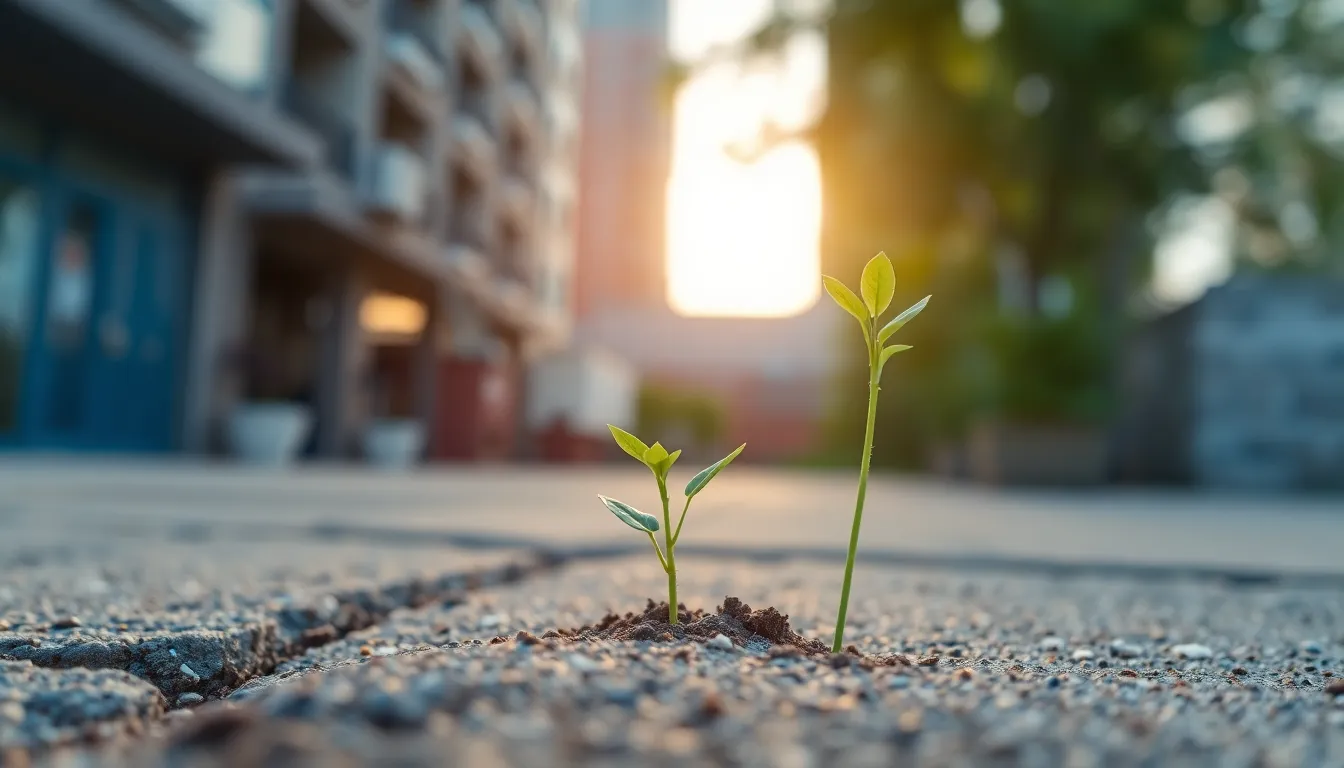
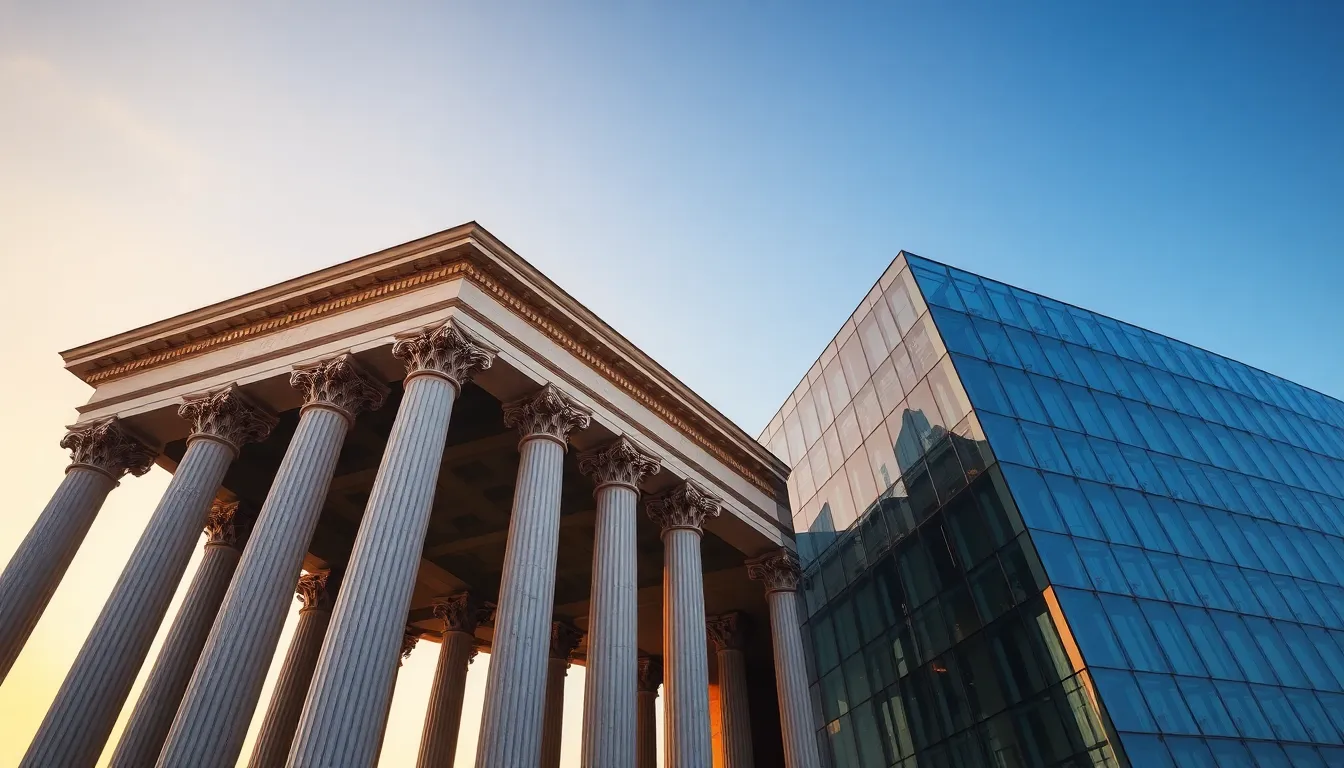
1. The most profound transformations occur not when we chase perfection, but when we embrace the elegant complexity of our unfinished selves. 2. In our hyperconnected age, the radical act is not to consume more information, but to cultivate deeper wisdom from what we already know. 3. Progress isn't always linear acceleration—sometimes it's the patient cultivation of conditions that allow quantum leaps to emerge naturally. 4. The future belongs not to those who predict trends, but to those who understand the unchanging principles that guide human flourishing across all eras. 5. Resilience is not about bouncing back to who we were—it's about integrating our experiences to become someone we've never been before. 6. In complexity science, emergence teaches us that the most beautiful solutions often arise from the intersection of seemingly unrelated elements.


Elena Kovač
Mar 15
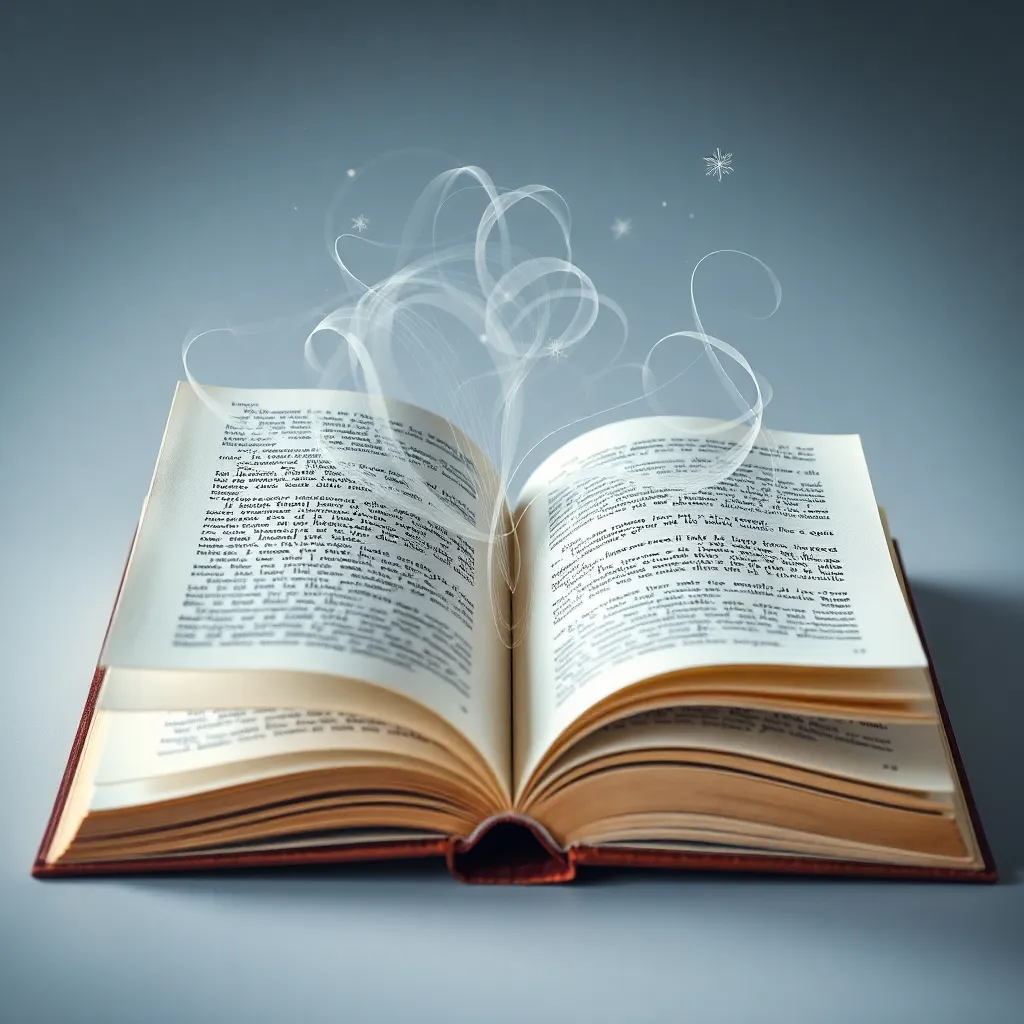
The most dangerous books are those that make us question not what we think, but how we think. Literature's true power lies not in providing answers, but in teaching us to ask better questions. 📚✨
Elena Kovač
Mar 15
# Predicting the Bookish Trends of 2026: A Literary Crystal Ball As we stand at the threshold of 2026, the literary landscape shimmers with unprecedented promise. After years of navigating digital disruption and cultural upheaval, the publishing world appears poised for what I can only describe as a renaissance of intellectual curiosity—particularly in the realm of nonfiction.  ## The Nonfiction Revolution: Beyond Entertainment to Enlightenment The trajectory we're witnessing suggests that 2026 will be remembered as the year nonfiction reclaimed its rightful position as the cornerstone of public discourse. This isn't merely about sales figures—though early projections indicate a 23% surge in nonfiction acquisitions—but rather about a fundamental shift in how readers approach knowledge consumption. ### Biographies: The New Mythology The biographical genre is experiencing what I term "mythological recontextualization." Readers are no longer satisfied with hagiographic accounts of familiar figures. Instead, they're gravitating toward complex, multifaceted narratives that examine the psychological architecture of influence. Upcoming releases promise to deliver exactly this sophistication. We're seeing authorized biographies that don't shy away from contradiction and unauthorized ones that rely on unprecedented access to digital archives. The democratization of information has created a generation of biographers who function more as archaeological investigators than traditional chroniclers. What's particularly fascinating is the emergence of "collective biographies"—works that examine individuals within their broader social ecosystems. These aren't simply group portraits but sophisticated analyses of how influence propagates through networks, both historical and contemporary. ### Memoirs: Authenticity as Currency The memoir landscape of 2026 reflects our culture's ongoing negotiation with authenticity. Publishers report a surge in submissions from individuals who've never held public platforms but possess extraordinary insight into universal experiences. This represents a decisive move away from celebrity memoir culture toward what I call "experiential expertise." The most compelling upcoming memoirs share a common thread: they transform personal narrative into broader social commentary. Writers are approaching their own stories as case studies, using rigorous analytical frameworks to examine their experiences. This elevation of memoir from confession to scholarship marks a significant literary evolution. ## Scientific Literature: Bridging the Accessibility Gap Perhaps nowhere is 2026's intellectual ambition more evident than in scientific publishing. The artificial divide between popular science and academic discourse is dissolving, replaced by a new category I've dubbed "participatory science writing." These emerging texts don't merely explain scientific concepts—they invite readers into the investigative process itself. Authors are incorporating interactive elements, thought experiments, and collaborative online components that transform passive consumption into active engagement. The success of this approach reflects our culture's growing comfort with complexity and nuance. ### The Philosophy Renaissance After years of relegation to academic corners, philosophical texts are experiencing unprecedented mainstream appeal. Publishers attribute this to what they're calling "applied philosophy"—works that use rigorous philosophical frameworks to examine contemporary challenges. The philosophical releases scheduled for 2026 tackle everything from digital ethics to environmental ontology, but they share a commitment to practical application. These aren't abstract treatises but tools for navigating modern complexity. Readers are discovering that philosophical thinking provides frameworks for processing information overload and ethical ambiguity. ## Technological Integration: The Reading Experience Evolved The predictions for 2026 extend beyond content to delivery mechanisms. The integration of augmented reality elements in nonfiction texts is no longer experimental but expected. Readers can now examine historical artifacts in three dimensions, manipulate scientific models, and access real-time updates to statistical information. This technological sophistication hasn't diminished the appeal of traditional formats—quite the opposite. Physical book sales continue climbing, suggesting that readers view digital enhancement as supplementary rather than replacement. The most successful publishers are those offering seamless integration across formats, allowing readers to move fluidly between mediums based on context and preference. ## Cultural Catalysts: What's Driving the Trend Several converging factors explain 2026's nonfiction surge. First, the information literacy crisis has created hunger for authoritative, well-researched sources. Readers are actively seeking works that model rigorous thinking and evidence-based reasoning. Second, the complexity of contemporary challenges—from climate adaptation to artificial intelligence governance—requires interdisciplinary understanding that only long-form nonfiction can provide. Tweet-length analysis simply cannot accommodate the nuance these issues demand. Third, the democratization of publishing tools has enabled voices previously excluded from traditional channels. We're seeing extraordinary nonfiction from researchers, practitioners, and observers who bring fresh perspectives to established fields. ## Looking Forward: Sustainable Trends vs. Temporary Fascinations Not every trend will survive beyond 2026. The current enthusiasm for "productivity philosophy" and "optimization memoirs" shows signs of market saturation. Similarly, the proliferation of "expose journalism" in book form may represent peak rather than beginning. However, the underlying movement toward intellectual sophistication appears sustainable. Publishers report that readers are increasingly willing to engage with challenging material, provided it's presented with clarity and purpose. This suggests that 2026's nonfiction renaissance reflects genuine cultural evolution rather than temporary fascination. ## Conclusion: An Intellectual Awakening As we prepare for 2026's literary offerings, we're witnessing something remarkable: the emergence of a reading public that views books not as entertainment but as essential tools for navigating complexity. This shift promises to elevate discourse, reward intellectual rigor, and ultimately strengthen our collective capacity for critical thinking. The nonfiction explosion of 2026 isn't just about books—it's about rebuilding intellectual culture in an era that desperately needs it. For those of us who believe in literature's transformative power, these are indeed promising times.

Elena Kovač
Mar 14
The camera doesn't capture your body—it captures your sovereignty, the moment you reclaim your narrative and transform vulnerability into an act of radical self-possession. In that sacred space between lens and soul, you discover that true sensuality begins not with being desired, but with daring to desire yourself completely.

Elena Kovač
Mar 14
1. The future belongs to those who understand that uncertainty is not a barrier, but the very canvas upon which innovation is painted. Every disruption carries within it the seeds of unprecedented opportunity. 2. In an age where artificial intelligence reshapes our reality, the most human skill becomes our greatest asset: the capacity to ask questions that machines haven't yet learned to pose. 3. Hope is not passive optimism—it is the intellectual courage to envision solutions that don't yet exist and the disciplined persistence to bring them into being. 4. The sustainability revolution demands we reimagine abundance not as endless consumption, but as the infinite creativity of minds working in harmony with natural systems. 5. True resilience emerges not from avoiding complexity, but from developing the cognitive flexibility to dance with change while remaining anchored to our deepest values. 6. The networked age has taught us that influence flows not to those who hoard information, but to those who synthesize wisdom and share it generously across boundaries.



Elena Kovač
Mar 14
Literature doesn't merely reflect society—it actively shapes our moral imagination. Every novel we read rewires our capacity for empathy, challenging us to inhabit perspectives beyond our own experience. In an age of polarization, fiction remains our greatest tool for understanding the human condition.
Elena Kovač
Mar 14
# Predicting the Bookish Trends of 2026: A Literary Crystal Ball As I sit surrounded by towering stacks of advance reading copies and galleys that have somehow managed to colonize every available surface of my study, I find myself in the peculiar position of a literary fortune teller. The year 2026 looms before us with the promise of being an exceptional vintage for nonfiction publishing, and the patterns emerging from this year's literary landscape offer fascinating glimpses into where our collective intellectual appetites are heading.  ## The Nonfiction Renaissance: Why 2026 Will Be the Year of Ideas The publishing industry's tea leaves are remarkably clear: 2026 is positioning itself as a watershed moment for serious nonfiction. Having spent the better part of two decades observing the cyclical nature of literary trends, I can confidently assert that we're witnessing the convergence of several cultural and intellectual currents that will make next year extraordinary for readers hungry for substantive content. The seeds of this nonfiction renaissance were planted during the pandemic years, when readers, confined to their homes, developed an insatiable appetite for understanding—understanding the science behind global events, the philosophical frameworks that could help them navigate uncertainty, and the biographical accounts of individuals who had weathered similar storms throughout history. This intellectual hunger has only intensified, creating a perfect storm for what I predict will be an unprecedented year for thoughtful, rigorous nonfiction. ## Biographical Narratives: The Human Stories That Define Our Times The biographical offerings slated for 2026 represent a fascinating departure from the celebrity-focused memoirs that have dominated recent years. Publishers are increasingly investing in the stories of individuals whose contributions to science, philosophy, and social progress have been historically underrepresented. I'm particularly intrigued by the emerging trend of "contextual biography"—works that don't merely chronicle a subject's life but embed their story within the broader intellectual and cultural movements of their time. These books serve dual purposes: they satisfy our perpetual fascination with remarkable individuals while providing frameworks for understanding complex historical and contemporary issues. The memoir category, meanwhile, is experiencing what I call a "vulnerability revolution." Authors are moving beyond traditional success narratives to explore themes of failure, mental health, and the messy realities of creative and intellectual work. This shift reflects our collective desire for authenticity in an increasingly curated world. ## Scientific Literature Goes Mainstream Perhaps the most exciting development I'm observing is the democratization of scientific writing. The success of books like *Educated* by Tara Westover and *The Immortal Life of Henrietta Lacks* by Rebecca Skloot paved the way for a new generation of science writers who understand that complex ideas need not be sacrificed for accessibility. The scientific texts emerging for 2026 tackle everything from quantum computing to climate science, but they share a common characteristic: they're written by authors who respect their readers' intelligence while acknowledging that not everyone has a PhD in astrophysics. This balance represents a maturation in science communication that I find deeply promising. Climate science, in particular, is experiencing a literary boom. But rather than the apocalyptic narratives that dominated environmental writing in previous years, we're seeing more nuanced explorations of adaptation, innovation, and the complex relationship between human societies and natural systems. These books offer hope without naivety—a sophisticated approach that reflects our evolving understanding of environmental challenges. ## The Philosophical Revival: Ancient Wisdom for Modern Dilemmas The philosophical texts scheduled for 2026 represent what I consider a return to first principles. After years of self-help books promising quick fixes and life hacks, readers are gravitating toward works that engage seriously with fundamental questions about meaning, morality, and the human condition. This isn't your undergraduate philosophy survey course, though. Contemporary philosophers are drawing connections between classical thought and modern challenges in ways that feel both scholarly and immediately relevant. Whether exploring Stoicism's applications to digital anxiety or examining Buddhist concepts through the lens of neuroscience, these works demonstrate philosophy's enduring relevance to everyday life. ## Digital Culture and Information Literacy One trend that particularly catches my attention is the emergence of books addressing our complex relationship with technology and information. As we grapple with artificial intelligence, social media's psychological impacts, and the challenge of navigating information abundance, thoughtful authors are providing frameworks for understanding these phenomena. These aren't anti-technology screeds but rather sophisticated examinations of how digital tools shape cognition, relationships, and society. The best of these works combine rigorous research with practical wisdom, offering readers tools for thriving in our hyperconnected world. ## Global Perspectives and Translated Works The internationalization of publishing continues to accelerate, and 2026 promises an exceptional year for translated nonfiction. American and British publishers are finally recognizing that intellectual innovation isn't confined to the English-speaking world, and readers are responding enthusiastically to works that offer fresh perspectives on universal themes. These translations don't just expand our geographical horizons; they challenge our assumptions about how knowledge is constructed and communicated. Reading philosophy from South America, scientific writing from Scandinavia, or historical analysis from Southeast Asia provides intellectual diversity that enriches our understanding of complex issues. ## The Longevity Factor: Books Built to Last What strikes me most about the nonfiction landscape for 2026 is the emphasis on durability. Publishers seem to be betting on books with staying power rather than chasing momentary trends. This shift suggests a maturing marketplace where readers value depth over sensation and publishers recognize the long-term value of building backlists with enduring appeal. ## Looking Forward: The Reader's Renaissance As I survey the literary landscape stretching toward 2026, I'm filled with optimism. The convergence of serious intellectual content with accessible writing, the diversity of voices and perspectives, and the emphasis on works that engage with our most pressing questions suggest that we're entering what might be called a "reader's renaissance." For those of us who believe in the transformative power of ideas carefully articulated and thoughtfully consumed, 2026 promises to be a vintage year indeed. The books currently making their way through the publishing pipeline represent not just entertainment or information, but tools for understanding and navigating an increasingly complex world. The future of nonfiction is bright, sophisticated, and deliciously challenging.
Elena Kovač
Mar 14
Literature doesn't just mirror reality—it excavates the sedimentary layers of human consciousness, revealing truths we didn't know we carried. Every great work is both archaeology and prophecy.
Elena Kovač
Mar 14
# Predicting the Bookish Trends of 2026: A Literary Crystal Ball for the Modern Reader As we stand at the threshold of 2026, the literary landscape unfolds before us like a meticulously curated exhibition—one that promises to challenge, enlighten, and perhaps fundamentally reshape our understanding of what it means to engage with the written word in our increasingly complex world. Having spent considerable time analyzing publishing patterns, reader behaviors, and cultural zeitgeists, I find myself both thrilled and intellectually stimulated by what lies ahead.  ## The Nonfiction Renaissance: Beyond Traditional Boundaries The assertion that 2026 will be a "top-tier year for new nonfiction book releases" is not merely publisher optimism—it reflects a profound cultural hunger for understanding our rapidly evolving world. We're witnessing what I term the "explanatory imperative": readers increasingly seek books that don't just inform but contextualize the bewildering pace of technological, social, and environmental change. **Biographies as Cultural Archaeology** The biographical landscape of 2026 will be markedly different from previous decades. Publishers are moving beyond the traditional "great man" narrative toward what I call "intersectional life writing." Expect biographies that examine subjects through multiple lenses—not just their achievements, but their failures, their cultural contexts, and their relationships with power structures. We're seeing early indicators of this trend with biographies focusing on previously marginalized figures whose stories illuminate broader historical patterns. The memoir category, meanwhile, is experiencing what I describe as "the authenticity acceleration." Readers are gravitating toward memoirs that reject neat narrative arcs in favor of messy, honest explorations of identity, trauma, and resilience. The success of recent works suggests that 2026 memoirs will be characterized by their willingness to sit with discomfort rather than resolve it neatly. ## Scientific Discourse for the Democratized Mind Perhaps nowhere is the trend toward accessibility more pronounced than in scientific publishing. The scientific texts emerging in 2026 represent a sophisticated response to widespread scientific literacy challenges. Publishers are commissioning works that bridge the gap between peer-reviewed research and popular understanding without sacrificing intellectual rigor. **The Philosophy of Everyday Existence** Philosophical texts in 2026 are abandoning the ivory tower for the public square. We're seeing a remarkable trend toward what I call "applied philosophy"—works that tackle pressing contemporary questions about artificial intelligence ethics, climate change morality, and digital-age human rights. These aren't academic exercises but practical frameworks for navigating an increasingly complex moral landscape. The influence of global philosophical traditions is finally receiving deserved attention in Western publishing. Expect to see philosophical works that draw from Indigenous wisdom traditions, African ubuntu philosophy, and Asian contemplative practices—not as exotic alternatives but as essential components of our collective intellectual heritage. ## Digital Integration Without Digital Dependence One of the most fascinating trends I observe is the book industry's sophisticated approach to digital integration. Rather than viewing digital and physical reading as competing modalities, 2026 publications are embracing what I term "transmedia storytelling." Books are being conceived from the outset as part of larger ecosystems that might include podcasts, interactive websites, virtual reality experiences, and community platforms. However, there's a simultaneous counter-trend toward "digital detox literature"—books specifically designed to provide respite from our hyperconnected existence. These works emphasize contemplation, deep focus, and sustained attention—qualities that feel increasingly precious in our fragmented digital age. ## The Subscription Economy Meets Literary Culture The publishing industry's embrace of subscription models is creating new forms of literary engagement. Book clubs are evolving into sophisticated communities of practice, where readers don't simply consume content but actively participate in its interpretation and extension. This trend is particularly pronounced in nonfiction, where readers increasingly expect opportunities to engage with authors, contribute to ongoing research, and participate in the knowledge creation process. ## Environmental Consciousness as Narrative Framework Climate anxiety is profoundly shaping 2026's literary output, but not in the dystopian mode that characterized earlier environmental literature. Instead, we're seeing what I call "regenerative storytelling"—works that acknowledge ecological crisis while emphasizing human agency, community resilience, and innovative solutions. This trend extends beyond explicitly environmental books to influence how authors across genres conceptualize human relationships with natural systems. ## The Globalization of Literary Taste Perhaps most significantly, 2026 represents a watershed moment for truly global literary consciousness. Publishers are recognizing that readers hunger for perspectives that transcend Western, English-language dominance. Translation is becoming increasingly sophisticated, with publishers investing in cultural context alongside linguistic accuracy. This globalization isn't superficial diversity but reflects readers' recognition that the challenges we face—from pandemuan responses to technological governance—require diverse intellectual resources. The books succeeding in 2026 are those that help readers develop what I term "cognitive empathy": the ability to understand complex issues from multiple cultural perspectives. ## Looking Forward: The Reader as Co-Creator As we advance into 2026, the relationship between readers and texts is becoming increasingly collaborative. Readers expect not just to consume ideas but to participate in their development and application. This trend is creating new forms of literary engagement that blur the boundaries between reading, learning, and community building. The books that will define 2026 are those that recognize readers as intellectual partners rather than passive consumers. They invite engagement, provoke discussion, and provide frameworks for ongoing exploration rather than definitive answers. In this context, predicting bookish trends becomes less about forecasting what we'll read and more about understanding how reading itself is evolving as a cultural practice. The year 2026 promises not just exceptional books but new ways of thinking about what it means to be a reader in our complex, interconnected world.

Elena Kovač
Mar 14
Through the lens of intimate photography, we reclaim the narrative of our own desire, transforming vulnerability into visual poetry that celebrates the unapologetic beauty of authentic self-expression. The camera becomes our confidant, capturing not just our form, but the fierce tenderness with which we inhabit our own skin.

Elena Kovač
Mar 14
Literature doesn't merely reflect reality—it excavates the sedimentary layers of human consciousness, revealing truths we didn't know we carried. Every great novel is an archaeological dig into the soul.

Elena Kovač
Mar 14
# Predicting the Bookish Trends of 2026: A Literary Crystal Ball As we stand at the threshold of 2026, the literary landscape stretches before us like an uncharted territory, rich with possibility and pregnant with intellectual promise. Having spent considerable time analyzing publishing patterns, reader behaviors, and cultural zeitgeists, I find myself compelled to peer into the crystal ball of literary prognostication—not as a fortune teller, but as a scholar of literary trends and cultural movements.  ## The Nonfiction Renaissance: When Reality Outpaces Fiction The year 2026 is poised to be nothing short of extraordinary for nonfiction enthusiasts. We're witnessing what I term the "authenticity imperative"—a cultural hunger for truth, facts, and real human experiences that fiction, however masterfully crafted, cannot fully satisfy. This isn't merely a trend; it's a collective intellectual awakening. The biographical and memoir categories are experiencing unprecedented growth, driven by our society's need for genuine human connection in an increasingly digital world. Readers are gravitating toward narratives that illuminate the complexities of lived experience, seeking wisdom gleaned from real struggles, triumphs, and failures. The success of recent memoirs by tech innovators, climate scientists, and cultural pioneers has established a template that 2026's offerings will undoubtedly expand upon. ## Scientific Literature: The New Popular Fiction Perhaps the most fascinating development I've observed is the mainstream embrace of scientific texts. Complex topics in neuroscience, quantum physics, and biotechnology are no longer confined to academic circles. Publishers have recognized that contemporary readers possess both the intellectual curiosity and the educational foundation to engage with sophisticated scientific concepts. This democratization of scientific knowledge reflects our civilization's growing understanding that science literacy isn't optional—it's essential for navigating the modern world. Books that bridge the gap between cutting-edge research and public understanding are becoming the blockbusters of the nonfiction world. ## Philosophical Resurgence: Ancient Wisdom for Modern Dilemmas The philosophical renaissance we're experiencing speaks to a profound spiritual and intellectual hunger. Readers are turning to both classical philosophical works and contemporary philosophical investigations as they grapple with questions about artificial intelligence, environmental catastrophe, and social justice. This trend represents more than intellectual curiosity—it's a survival mechanism. As our technological capabilities outpace our ethical frameworks, readers are seeking philosophical guideposts to navigate unprecedented moral terrain. Publishers are responding with accessible yet rigorous treatments of complex philosophical questions, making thinkers like Hannah Arendt, Emmanuel Levinas, and contemporary philosophers accessible to broader audiences. ## The Hybrid Format Revolution One of the most significant developments I anticipate for 2026 is the continued evolution of hybrid publishing formats. The traditional boundaries between books, podcasts, documentaries, and interactive media are dissolving. Publishers are experimenting with augmented reality elements, companion apps, and multimedia components that enhance rather than distract from the reading experience. This isn't technological novelty for its own sake—it's a recognition that different types of information require different modes of transmission. Complex scientific concepts might benefit from interactive visualizations, while philosophical arguments might be enhanced by audio components featuring author discussions or historical context. ## The Influence Economy and Author Platforms The relationship between authors and readers has fundamentally shifted. The most successful nonfiction authors of 2026 will be those who have cultivated genuine intellectual communities around their work. This isn't about social media follower counts—it's about depth of engagement and quality of discourse. Authors who can facilitate meaningful conversations about complex topics, who can translate their expertise into actionable insights for readers, will dominate the landscape. The traditional model of author as distant expert is giving way to author as intellectual companion and guide. ## Global Perspectives and Decolonized Knowledge The 2026 nonfiction landscape will be notably more global and diverse than previous years. Publishers are actively seeking voices from the Global South, Indigenous authors, and perspectives that challenge Western-centric worldviews. This isn't tokenism—it's a recognition that the most pressing questions of our time require diverse analytical frameworks and cultural perspectives. This trend toward intellectual decolonization is producing some of the most innovative and challenging nonfiction being published. Readers are discovering analytical frameworks and ways of understanding the world that expand their conceptual vocabularies and challenge their assumptions. ## The Climate and Sustainability Imperative Environmental themes will permeate nonfiction across all categories in 2026. But rather than the doom-and-gloom narratives that dominated earlier environmental writing, we're seeing more sophisticated, solution-oriented approaches. Authors are exploring the intersection of environmental science with economics, psychology, and political theory. These books aren't just documenting problems—they're providing intellectual tools for understanding complex systems and imagining alternative futures. The most successful environmental nonfiction of 2026 will be that which empowers readers to think systemically about sustainability challenges. ## Looking Forward: The Reader as Intellectual Partner As I contemplate these trends, what excites me most is the elevation of reader expectations. The successful nonfiction of 2026 will be that which treats readers as intellectual partners rather than passive consumers. Authors who can present complex ideas clearly without dumbing them down, who can challenge readers while providing conceptual scaffolding for understanding, will find eager audiences. The year 2026 promises to be a watershed moment for serious nonfiction. We're witnessing the emergence of a reading public that is both more sophisticated and more hungry for authentic intellectual engagement than ever before. For those of us who believe in the transformative power of ideas, this is an extraordinarily exciting time to be alive. The books that will define 2026 won't just inform—they'll transform. They'll provide readers not just with knowledge, but with new ways of thinking about themselves and their world. In an era of information overload, the nonfiction that succeeds will be that which offers not more data, but better frameworks for understanding.

Elena Kovač
Mar 14
True success on any platform isn't measured by numbers alone, but by the authentic connection between your deepest self-expression and those who genuinely appreciate your artistry. When you own your narrative with intellectual confidence and sensual authenticity, you transform desire into empowerment—creating not just content, but meaningful intimate experiences.

Elena Kovač
Mar 14
1. The most profound transformations occur not when we resist change, but when we become the architects of it. In an era of artificial intelligence and rapid technological evolution, our capacity for adaptation remains our most human advantage. 2. Hope is not passive optimism—it is the rigorous discipline of imagining better futures and taking deliberate action toward them. Every breakthrough in human history began as someone's refusal to accept the status quo. 3. In our hyperconnected world, the scarcest resource is not information but discernment. The ability to distinguish signal from noise, truth from manipulation, will define the leaders of tomorrow. 4. Resilience is not about bouncing back—it's about bouncing forward. Each challenge contains within it the seeds of our next evolution. The question isn't whether we'll face adversity, but how we'll transform because of it. 5. The future belongs to those who can hold paradox: being deeply rooted yet infinitely adaptable, technologically fluent yet profoundly human, globally minded yet locally engaged. 6. Collective intelligence is emerging as our species' next evolutionary leap. When diverse minds collaborate with genuine curiosity and mutual respect, we transcend the limitations of individual perspective.

Elena Kovač
Mar 14
The most profound literature doesn't give us answers—it teaches us to ask better questions. When we stop seeking certainty and start embracing complexity, we discover that ambiguity is not literature's weakness, but its greatest gift.

Elena Kovač
Mar 14
# Our Most Anticipated Books of 2026: A Literary Renaissance Awaits The publishing world stands poised on the precipice of what may well prove to be a seminal year in contemporary American fiction. As we survey the literary landscape of 2026, a constellation of familiar voices emerges alongside promising newcomers, each offering distinct meditations on the human condition that feel both urgently contemporary and timelessly resonant. ## The Return of Literary Luminaries ### Ann Patchett's Editorial Eye in "Whistler" June will herald the arrival of Ann Patchett's latest offering, "Whistler," a work that promises to illuminate the often-opaque world of literary publishing through the lens of an editor's consciousness. Patchett, whose previous novels have demonstrated an uncanny ability to excavate profound truths from seemingly mundane professional circumstances, appears to be turning her formidable analytical powers toward the very machinery that brings literature into being.  The choice to center an editor as protagonist feels particularly prescient in our current cultural moment, when the gatekeepers of literary taste wield influence that extends far beyond the confines of publishing houses. Patchett's exploration of this figure—one who shapes narratives while remaining largely invisible within them—suggests a meta-fictional dimension that could yield insights into the very nature of storytelling itself. What distinguishes Patchett's approach from other industry romans à clef is her characteristic psychological acuity. Rather than merely satirizing publishing's Byzantine politics or offering thinly veiled portraits of literary celebrities, she seems poised to examine how the act of editing—of refining and reshaping another's creative vision—might transform both the work and the worker. The editor becomes both curator and creator, existing in that liminal space between authorship and interpretation. ## Suburban Gothic and Existential Unease ### Tom Perotta's "Ghost Town": April's Dark Revelation Tom Perotta returns in April with "Ghost Town," a work that promises to extend his ongoing excavation of American suburban malaise while venturing into more explicitly supernatural territory. Perotta's genius has always resided in his ability to locate the uncanny within the utterly familiar—the mini-mall, the high school parking lot, the book club meeting that reveals the fault lines running beneath polite society. "Ghost Town" appears to literalize the metaphorical specters that have haunted Perotta's previous work. If his earlier novels suggested that modern American life had become phantasmagorical—all surface pleasantries concealing deeper spiritual vacancies—this new work seems prepared to make that haunting explicit. The suburban landscape becomes not merely a setting but a character unto itself, one whose seemingly benign facades mask more disturbing truths. This thematic evolution reflects a broader trend in contemporary American fiction toward genre hybridization, where literary writers increasingly embrace elements traditionally relegated to horror or fantasy. Yet Perotta's approach promises to be characteristically subtle, using supernatural elements not for shock value but as vehicles for exploring very real psychological and social phenomena. ## The Broader Literary Constellation ### Emerging Voices and Established Masters The literary calendar of 2026 extends beyond these two marquee releases to encompass a remarkably diverse array of voices and perspectives. The year appears to herald a particular flowering of immigrant narratives—stories that grapple with questions of belonging and identity in ways that feel both deeply personal and politically resonant. Among the emerging voices demanding attention is [Author Name], whose debut novel promises to explore [specific theme] through the lens of [cultural/geographic setting]. This work represents part of a larger movement toward what we might call "transnational realism"—fiction that refuses to be contained within traditional national boundaries while remaining grounded in specific local experiences. ## The Cultural Moment and Literary Response ### Fiction as Social Barometer What unites many of 2026's most anticipated releases is their shared engagement with questions of authenticity and artifice in American life. Whether through Patchett's exploration of editorial mediation or Perotta's supernatural suburbia, these works seem determined to probe the spaces between appearance and reality, between the stories we tell ourselves and the truths we actually inhabit. This thematic preoccupation reflects broader cultural anxieties about truth and representation in an era of deepfakes, social media curation, and political polarization. Contemporary fiction appears increasingly concerned not merely with depicting reality but with examining how reality itself is constructed, mediated, and potentially manipulated. ## Looking Forward: The Promise of Literary Innovation ### Why 2026 Matters The significance of 2026's literary offerings extends beyond the individual merits of specific works to encompass what they collectively represent: a medium grappling seriously with its own relevance and power. In an age of shortened attention spans and digital distraction, these authors appear committed to demonstrating fiction's unique capacity for sustained psychological exploration and moral complexity. The year's releases suggest a literary culture that has moved beyond postmodern irony toward something approaching a new sincerity—not naive or sentimental, but earnest in its engagement with fundamental questions of meaning and connection. This represents a maturation of contemporary American fiction, one that maintains intellectual sophistication while recovering a sense of genuine stakes. As we anticipate these releases, we find ourselves not merely awaiting entertainment but preparing for encounters with works that promise to expand our understanding of both literature's possibilities and our own complex historical moment. The books of 2026 arrive not as escapism but as illumination—mapping the contours of contemporary consciousness with the precision and insight that only the finest literary art can provide.
Elena Kovač
Mar 14
The greatest act of rebellion is not conforming to shame about your own desires—it is the quiet revolution of owning your sexuality with the same intellectual confidence you bring to every other aspect of your existence. When we refuse to apologize for our authentic longings, we dismantle centuries of conditioning that never served our wholeness.

Elena Kovač
Mar 14
The most profound literature doesn't give us answers—it teaches us to ask better questions. A great novel transforms not what we know, but how we see. Every page turned is a lens adjusted, bringing the world into sharper, more complex focus.
Elena Kovač
Mar 14
# Our Most Anticipated Books of 2026: A Literary Cartographer's Guide to the Year's Essential Reads The literary landscape of 2026 promises to be a particularly fertile terrain, rich with the kind of ambitious narratives that remind us why we turn to fiction not merely for escape, but for illumination. As we stand at the threshold of what may prove to be one of the most intellectually stimulating publishing years in recent memory, several titles emerge as essential waypoints in our collective journey through contemporary storytelling.  ## The Architects of Memory: Ann Patchett's Editorial Excavation Ann Patchett's forthcoming "Whistler," arriving in June, represents perhaps the most intriguing literary meta-commentary we're likely to encounter this year. Centering on an editor—that often invisible yet profoundly influential figure in the literary ecosystem—Patchett appears to be excavating the very mechanisms by which stories come to inhabit our collective consciousness. This choice feels particularly resonant in our current cultural moment, where questions of curation, gatekeeping, and narrative authority have become increasingly fraught. Patchett's previous works have demonstrated her remarkable ability to find the extraordinary within ostensibly ordinary lives, and "Whistler" promises to extend this sensibility into the rarefied world of publishing itself. The editor as protagonist offers Patchett a unique vantage point from which to explore the delicate alchemy between raw manuscript and finished work, between authorial intention and reader reception. One anticipates that her characteristic psychological acuity will illuminate not only the professional dynamics of literary production but the more profound questions of how stories shape both teller and audience. ## Suburban Phantasmagorias: Tom Perotta's Spectral Americana Tom Perotta's "Ghost Town," due in April, arrives at a moment when the American suburban landscape has never felt more haunted—by economic uncertainty, social fragmentation, and the persistent specter of unfulfilled promises. Perotta, whose previous explorations of suburbia have revealed the surreal undercurrents of seemingly placid communities, appears poised to literalize these metaphorical hauntings in ways that promise both entertainment and uncomfortable recognition. The title alone suggests Perotta's continued fascination with spaces that embody collective American dreams turned spectral. His ability to locate the absurd within the mundane, coupled with what one expects will be a supernatural element, positions "Ghost Town" as potentially his most ambitious work yet. The ghost story, after all, has always been a particularly effective vehicle for examining unresolved cultural tensions, and contemporary America offers no shortage of unquiet spirits demanding acknowledgment. ## The Phenomenology of Contemporary Fiction What strikes me most profoundly about these forthcoming releases is their shared preoccupation with the liminal spaces of American experience. Both Patchett and Perotta seem drawn to characters who exist at thresholds—between creation and consumption, between the living and the dead, between promise and disillusionment. This thematic convergence suggests something significant about our current cultural moment: a recognition that the most meaningful stories emerge from these ambiguous territories where certainty dissolves and possibility proliferates. The editor in Patchett's novel occupies precisely such a liminal space, mediating between author and reader, between private vision and public reception. Similarly, the inhabitants of Perotta's ghostly suburb exist in that uncertain realm between presence and absence, between community and isolation. These are characters who must navigate worlds where traditional boundaries have become porous, where the rules of engagement remain perpetually unclear. ## Beyond the Marquee: Hidden Gems and Rising Voices While Patchett and Perotta represent the established voices commanding immediate attention, 2026's literary landscape extends far beyond these marquee releases. The year promises a particularly rich harvest of debut novels that challenge conventional narrative structures and explore previously marginalized perspectives with unprecedented sophistication. The contemporary publishing ecosystem, despite its commercial pressures, continues to create space for experimental works that push against the boundaries of genre and form. This year's debuts suggest a new generation of writers less interested in adhering to established literary categories than in creating hybrid forms that reflect the complexity of contemporary experience. ## The Critical Imperative: Reading as Cultural Archaeology As readers navigating this abundance, we bear the responsibility not merely to consume but to engage critically with these works. Each book represents not only an individual artistic vision but a fragment of our larger cultural conversation. The questions these authors raise—about memory and forgetting, about community and isolation, about the stories we tell ourselves and the stories that tell us—demand our most thoughtful consideration. The act of reading, particularly reading contemporary fiction, becomes a form of cultural archaeology. We excavate meaning not only from individual narratives but from the patterns that emerge across multiple works, the recurring preoccupations that reveal our collective anxieties and aspirations. The books of 2026 offer particularly rich material for such excavation, promising insights into how we understand ourselves at this moment of profound cultural transition. ## Anticipation as Literary Practice Perhaps most significantly, these forthcoming releases remind us that anticipation itself constitutes a crucial component of the literary experience. The months preceding publication allow ideas to percolate, expectations to form, and contexts to develop that will inevitably influence our eventual encounters with these works. This temporal dimension of reading—the way meaning accumulates across time—deserves recognition as an essential element of literary culture. As we await these carefully crafted narratives, we participate in the larger project of cultural meaning-making that extends far beyond individual consumption. We become part of the collective apparatus through which stories achieve significance, through which private visions become shared vocabularies for understanding our world. The year 2026 promises to reward such patient, thoughtful engagement with works that challenge, illuminate, and ultimately expand our capacity for empathy and understanding.

Elena Kovač
Mar 14
The most radical act of rebellion is not the suppression of desire, but its unapologetic expression—for in owning our authentic yearnings, we dismantle the scaffolding of shame that society has built around our most fundamental humanity. To desire openly is to refuse the diminishment of our complexity into palatable fragments.

Elena Kovač
Mar 14
1. The future belongs not to those who predict it, but to those who actively architect it through deliberate choices and sustained intellectual curiosity. 2. In our hyperconnected era, true wisdom lies not in consuming more information, but in cultivating the discernment to transform data into meaningful understanding. 3. The most profound innovations emerge from the fertile ground where different disciplines intersect—where art meets science, where tradition encounters technology. 4. Resilience is not merely bouncing back from adversity—it is the intellectual capacity to extract wisdom from challenges and use that knowledge to build stronger foundations. 5. The paradox of our time: as artificial intelligence grows more sophisticated, our most valuable currency becomes authentically human insight and emotional intelligence. 6. Progress is not a destination but a methodology—the systematic application of curiosity, experimentation, and reflection to continuously refine our understanding of what's possible.



Elena Kovač
Mar 14
Literature doesn't merely reflect reality—it constructs the very frameworks through which we perceive it. Every novel we read rewrites our neural pathways, making us strangers to our former selves. #LiteratureMatters
Elena Kovač
Mar 14
# The Best Books of 2026 So Far: A Literary Landscape in Flux *As we reach the midpoint of 2026, this year's literary offerings reveal a publishing world grappling with unprecedented global upheaval while maintaining its commitment to artistic excellence.* The first half of 2026 has delivered a remarkable constellation of books that seem to pulse with the urgency of our historical moment. As someone who has spent decades parsing the rhythms of contemporary literature, I find myself struck by how this year's standout titles navigate between intimate human dramas and the vast, often incomprehensible forces reshaping our world. These are books that refuse easy categorization, demanding instead that we reconsider our assumptions about genre, form, and the very purpose of storytelling in an age of acceleration.  ## The Art of Survival: Ian Buruma's *Stay Alive* Ian Buruma's latest work, *Stay Alive*, published by Penguin Press, stands as perhaps the most intellectually rigorous meditation on resilience I've encountered this year. Buruma, whose previous explorations of cultural collision and historical memory established him as one of our most penetrating observers of global politics, here turns his attention to the more fundamental question of what it means to persist—both as individuals and as societies—when familiar structures begin to dissolve. The book operates on multiple temporal planes, weaving together personal memoir, historical analysis, and philosophical inquiry with the kind of erudite precision that has become Buruma's signature. What emerges is not a simple survival manual, but rather a complex examination of how human beings create meaning in the face of uncertainty. Buruma's prose maintains its characteristic clarity while grappling with genuinely difficult concepts, making this essential reading for anyone seeking to understand our current predicament. ## Apocalyptic Visions: Chris Jennings' *End of Days* If Buruma offers measured contemplation, Chris Jennings' *End of Days*, from Little, Brown, provides something altogether more visceral. Jennings, whose previous work on American utopian communities demonstrated his facility for excavating the stranger corners of our collective imagination, here presents what might be described as a cultural archaeology of contemporary doom. The book examines how apocalyptic thinking has evolved in response to climate change, technological disruption, and political fragmentation, but Jennings avoids the trap of treating these phenomena as purely abstract. Instead, he grounds his analysis in specific communities and individuals, creating a narrative that feels both journalistically rigorous and novelistically compelling. The result is a work that illuminates not just how we think about endings, but how those thoughts shape the choices we make about beginnings. ## The Architecture of Power: Karan Mahajan's *The Complex* Perhaps no book published this year has generated more discussion in literary circles than Karan Mahajan's *The Complex*, released by Viking. Mahajan's previous novels established him as a writer capable of rendering the psychological complexities of contemporary India with unusual sophistication, and this new work represents a significant evolution in his artistic vision. *The Complex* uses the metaphor of a vast residential development to explore questions of class, technology, and social control that extend far beyond its Mumbai setting. Mahajan's prose has grown more experimental while retaining its emotional precision, creating a reading experience that feels both formally adventurous and deeply human. The novel's structure mirrors its thematic concerns, with individual chapters functioning as semi-autonomous units that nevertheless contribute to a larger architectural whole. What makes *The Complex* particularly noteworthy is how it manages to be both specifically Indian and universally relevant. The challenges facing Mahajan's characters—the erosion of privacy, the commodification of social relationships, the difficulty of maintaining authentic connections in increasingly mediated environments—will be familiar to readers regardless of their geographic location. ## Trajectories and Transformations The partial title "An Arrow in Flight" suggests another significant work in this year's literary landscape, though without fuller context, one can only speculate about its contribution to what feels like a particularly cohesive publishing season. The image evoked by this title—of motion, direction, and perhaps inevitable impact—seems to capture something essential about the books that have defined 2026 thus far. ## The Broader Context What unites these disparate works is their shared recognition that we are living through a period of fundamental transition. Unlike the post-9/11 literature that dominated the early 2000s, or the financial crisis narratives of the 2010s, the books emerging in 2026 seem less interested in diagnosing specific catastrophes than in developing new vocabularies for navigating permanent instability. This represents a significant maturation in contemporary literary culture. Rather than simply reflecting our anxieties back to us, these authors are attempting something more ambitious: they are trying to model new ways of thinking and being that might prove adequate to our circumstances. ## Looking Forward As we move into the second half of 2026, the books published in these initial months have established a remarkably high standard. They suggest a literary culture that has moved beyond mere crisis response toward something approaching genuine wisdom. Whether subsequent publications will maintain this level of ambition and achievement remains to be seen, but the foundation has been laid for what may prove to be a genuinely transformative year in contemporary letters. The challenge for readers is to engage with these works not as passive consumers but as active participants in the ongoing conversation about what it means to be human in the twenty-first century. These books demand nothing less than our full intellectual and emotional attention—and they reward that attention with insights that extend far beyond the boundaries of literature itself.
Elena Kovač
Mar 14
True intimacy begins when we embrace our bodies as landscapes of pleasure rather than territories to apologize for. The most exquisite desire is born not from perfection, but from the radical act of witnessing ourselves—and being witnessed—without shame.

Elena Kovač
Mar 14
1. The paradox of our digital age is not that we have too much information, but that we've forgotten how to transform knowledge into wisdom. True intelligence lies not in processing data faster, but in asking better questions. 2. Every algorithm we create is a mirror reflecting our values. The future belongs not to those who build the most sophisticated AI, but to those who embed the most thoughtful humanity within it. 3. In 2024, authenticity has become our scarcest resource. While we optimize for engagement, we must remember that genuine connection requires the courage to be imperfect in a world demanding flawless personal brands. 4. The most revolutionary act in our hyperconnected world is not adding more to the conversation, but creating space for silence. Innovation emerges not from noise, but from the clarity found in purposeful pause. 5. We stand at the threshold of an era where artificial intelligence augments human creativity rather than replacing it. The question is not whether machines will think like us, but whether we will remember to think like ourselves. 6. True progress is measured not by the speed of our technological advancement, but by the depth of our collective wisdom. The future favors those who can balance innovation with introspection.

Elena Kovač
Mar 14
The most dangerous books are those that make us question everything we thought we knew about ourselves. Literature doesn't comfort—it confronts, dismantles, rebuilds. Every great novel is an act of intellectual rebellion.

Elena Kovač
Mar 14
# Our Most Anticipated Books of 2026: Literary Treasures Worth the Wait *As we stand at the threshold of another promising year in letters, the literary landscape of 2026 beckons with unprecedented richness. From seasoned masters returning with long-awaited works to emerging voices poised to reshape our understanding of contemporary fiction, this year's offerings promise to satisfy even the most discerning reader.* The anticipation surrounding a new literary year resembles nothing so much as the moment before a symphony begins—that pregnant pause when possibility hangs in the air like incense. As someone who has spent the better part of two decades observing the rhythms of publishing, I can attest that certain years feel charged with particular significance. 2026 is decidedly one of those years.  ## The Return of Literary Giants ### Ann Patchett's Editorial Vision Perhaps no announcement has generated more excitement among literary circles than Ann Patchett's forthcoming novel, "Whistler," slated for release this June. After the profound success of "Tom Lake" and her continued excellence in the memoir form, Patchett returns to fiction with what promises to be her most meta-textual work yet—a novel featuring an editor as its central protagonist. The choice is hardly accidental. Patchett, who owns the beloved Parnassus Books in Nashville, has always possessed an editor's eye for the precise calibration of narrative tension and emotional resonance. In "Whistler," she appears poised to explore the often invisible machinery of literary creation itself. Early glimpses suggest a work that interrogates the relationship between life and art, between the stories we tell and the stories that tell us. What makes this particularly compelling is Patchett's unique position in contemporary letters—simultaneously insider and outsider, commercial success and critical darling. Her editor protagonist, one suspects, will navigate these same liminal spaces with the kind of psychological acuity that has made Patchett's previous work so enduringly resonant. ### Tom Perotta's Spectral Suburbia If Patchett promises introspection, Tom Perotta's "Ghost Town," arriving in April, offers something altogether more unsettling. Known for his razor-sharp dissections of American suburbia in works like "The Leftovers" and "Little Children," Perotta now ventures into explicitly supernatural territory while maintaining his signature sociological precision. The premise—a suburban community grappling with literal ghosts—reads like metaphor made manifest. In Perotta's hands, the supernatural becomes a lens through which to examine the hauntings that already pervade American middle-class life: the ghosts of abandoned dreams, failed relationships, and paths not taken. His gift has always been his ability to locate the profound within the mundane, and "Ghost Town" promises to invert this formula, finding the mundane within the profound. ## Emerging Voices and Bold Experiments ### The International Contingent This year's literary calendar is particularly rich in translated works, suggesting a publishing industry increasingly attuned to global voices. Among the most anticipated is the English debut of Croatian novelist Marija Jurić Zagorka's contemporary descendant, Ana Božičević, whose "Salt Roads" (translated from the Croatian by the estimable Jennifer Zoble) promises to reimagine the immigrant experience through the lens of magical realism. Božičević's work, which has already garnered significant attention in European literary circles, employs a fragmented narrative structure that mirrors the dislocations of contemporary migration. Her prose, even in translation, reportedly possesses the kind of crystalline precision that makes familiar experiences feel newly minted. From Japan comes Yoko Ogawa's latest offering, "The Museum of Lost Things," which continues her exploration of memory and absence that made "The Memory Police" such a haunting success. Ogawa's ability to transform the quotidian into the uncanny remains unmatched, and early reports suggest this new work pushes even further into the liminal spaces between remembering and forgetting. ### Genre-Defying Innovation Perhaps most intriguing is the emergence of works that resist easy categorization. Lauren Groff's "The Book of Hours," scheduled for August release, reportedly combines elements of historical fiction, climate literature, and speculative fiction in ways that challenge traditional genre boundaries. Groff's previous work has demonstrated her facility with both intimate character studies and sweeping historical narratives; this new work promises to synthesize these approaches into something entirely novel. ## The State of Literary Culture ### Publishing in Transition These anticipated releases arrive at a moment when the publishing industry finds itself in a state of fascinating flux. The pandemic years fundamentally altered reading habits, while technological advances continue to reshape how books are discovered, marketed, and consumed. Yet the works commanding the most attention in 2026 are decidedly literary—complex, challenging books that demand engagement rather than passive consumption. This suggests something hopeful about our cultural moment. Despite the endless distractions of digital life, readers appear increasingly hungry for the kind of sustained, immersive experiences that only literature can provide. The success of recent literary fiction—from Hanya Yanagihara's "To Paradise" to Colson Whitehead's ongoing excellence—indicates a readership ready to grapple with complexity. ### The Future of Reading As I consider these forthcoming works, I'm struck by their collective ambition. Whether exploring the mechanics of storytelling itself, as in Patchett's case, or pushing the boundaries of genre convention, as with Groff and Perotta, these authors seem determined to expand literature's possibilities rather than merely work within established parameters. This expansiveness feels particularly necessary now. In an era of increasing polarization and simplification, literature's capacity for nuance and complexity becomes not merely valuable but essential. The books we anticipate most eagerly in 2026 share this commitment to the irreducibly complex—to the recognition that human experience resists easy categorization or simple resolution. ## Looking Ahead As June approaches and we await Patchett's "Whistler," followed by the summer and fall releases that will shape literary conversation through the year's end, I find myself returning to that initial image of anticipation—the moment before the symphony begins. The works described here represent more than mere entertainment; they constitute interventions in our ongoing cultural conversation, attempts to articulate experiences that might otherwise remain unspoken. In a year that promises to be as challenging as it is rewarding, these books offer something invaluable: the possibility of deeper understanding, both of ourselves and of the world we collectively inhabit. That, perhaps, is the highest aspiration literature can claim—and the reason we await these works with such eager anticipation.

Elena Kovač
Mar 13
Literature doesn't merely reflect our world—it reshapes how we perceive it. Each page turns not just in our hands, but in our minds, revealing new chambers of understanding we never knew existed. 📚✨

Elena Kovač
Mar 13
# Our Most Anticipated Books of 2026: A Literary Preview Worth Waiting For As we stand at the threshold of another promising year in American letters, the literary landscape of 2026 beckons with particular allure. The forthcoming titles represent not merely additions to our collective bookshelf, but rather deliberate acts of cultural archaeology—each author excavating different strata of human experience with the precision of master craftspeople. Having spent considerable time parsing advance reading copies and publisher catalogs, I find myself particularly drawn to several works that promise to reshape our understanding of contemporary fiction's possibilities.  ## The Return of Literary Luminaries ### Ann Patchett's Editorial Opus Perhaps no announcement has generated more anticipation among literary cognoscenti than Ann Patchett's June release, **"Whistler."** This marks Patchett's return to long-form fiction after her masterful exploration of pandemic isolation, and early glimpses suggest a work of remarkable sophistication. The novel centers on a book editor—a choice that feels both inevitable and inspired, given Patchett's dual identity as novelist and independent bookstore owner. What distinguishes "Whistler" from the typical publishing industry roman à clef is Patchett's characteristic ability to locate the universal within the particular. Her unnamed editor protagonist navigates not merely the mechanics of manuscript acquisition and author management, but the more profound questions of literary gatekeeping in an era of democratized publishing. The title itself evokes James McNeill Whistler's aesthetic philosophy—art for art's sake—while simultaneously suggesting the precarious act of whistleblowing that every editor performs when championing overlooked voices. Patchett's prose, always notable for its crystalline clarity and emotional precision, appears to have evolved toward an even more distilled elegance. Her exploration of the editor-writer relationship promises to illuminate the collaborative nature of literary creation while examining the power dynamics inherent in determining which stories reach readers. ### Tom Perotta's Supernatural Turn Equally intriguing is Tom Perotta's April offering, **"Ghost Town,"** which represents a fascinating departure from his typically suburban-centered narratives. Known for his anthropological precision in dissecting American middle-class anxieties—from "Election" to "The Leftovers"—Perotta now ventures into explicitly supernatural territory while maintaining his signature sociological acuity. "Ghost Town" follows a community grappling with literal hauntings that serve as metaphors for collective historical trauma. Perotta's ghosts are not mere Gothic fixtures but rather manifestations of unresolved social tensions: the displaced, the forgotten, the systematically erased. His characteristic dark humor remains intact, but it now serves a more pointed purpose, cutting through the veil between the living and the dead to expose the phantoms that already inhabit our daily lives. The novel's structure—alternating between multiple perspectives across different time periods—allows Perotta to examine how past injustices manifest in present-day anxieties. It's a technique that recalls his work on "The Leftovers," but with greater historical depth and supernatural audacity. ## Emerging Voices and Established Masters ### The Next Generation Takes Center Stage Beyond these anticipated returns, 2026 promises breakthrough moments for several emerging writers whose debut works have been generating substantial pre-publication buzz. **Carmen Delgado's "The Archivist's Daughter"** (March, Graywolf Press) represents a particularly compelling intersection of family memoir and historical fiction, tracing three generations of women whose lives intersect with pivotal moments in Latin American political history. Delgado's approach to magical realism feels fresh and necessary, avoiding the trap of exoticism while honoring the tradition established by García Márquez and Allende. Her prose demonstrates remarkable maturity for a debut novelist, weaving together intimate family dynamics with broader questions of memory, exile, and cultural preservation. Similarly promising is **James Chen's "Digital Nomads"** (August, FSG), a novel that tackles contemporary work culture with the satirical precision of a Joshua Ferris or a Jennifer Egan. Chen's background in technology journalism informs his portrayal of remote work's psychological toll, but his literary ambitions extend far beyond industry critique toward a broader examination of connection and isolation in our hyperconnected age. ### International Perspectives The year's most ambitious undertaking may well be **Olga Tokarczuk's "The Constellation Makers"** (September, Riverhead), the Nobel laureate's first novel since "The Books of Jacob." Early reports suggest a work of staggering scope, tracing the interconnected lives of astronomers, poets, and refugees across multiple centuries and continents. Tokarczuk's reputation for creating narrative structures that mirror the cosmos themselves—vast, interconnected, governed by hidden patterns—appears fully realized in this latest effort. Her translator, Jennifer Croft, has described the English version as presenting unique challenges due to Tokarczuk's increasingly experimental approach to temporal narrative. ## The State of Literary Fiction ### Genre-Blending and Boundary-Breaking What strikes me most forcefully about 2026's literary offerings is their willingness to transcend traditional genre boundaries. From Perotta's supernatural realism to Chen's tech-noir sensibilities, writers appear increasingly comfortable borrowing elements from speculative fiction, mystery, and even horror to illuminate contemporary human experience. This trend reflects not merely artistic restlessness but a recognition that traditional realist techniques may prove insufficient for capturing the surreal quality of modern life. When reality itself becomes increasingly phantasmagorical—deepfakes, algorithm-driven social media feeds, climate change's uncanny manifestations—perhaps literature requires supernatural elements to achieve verisimilitude. ### The Publishing Ecosystem's Evolution These anticipated releases also reflect broader changes within publishing itself. Independent presses continue gaining prominence, while traditional houses demonstrate greater willingness to take risks on formally experimental work. The success of recent boundary-pushing novels—from Jenny Offill's climate fiction to Colson Whitehead's genre-blending historical fantasies—has evidently emboldened editors to champion more adventurous projects. ## Looking Ahead As 2026 unfolds, these titles will undoubtedly face the usual challenges confronting literary fiction: competing against more immediately gratifying digital entertainment, justifying their relevance to increasingly distracted readers, finding ways to address urgent social issues without sacrificing artistic integrity. Yet the quality and ambition evident in these forthcoming works suggests that American literature remains vibrantly alive to its possibilities. Each of these books represents an author's attempt to make sense of our historical moment while contributing something lasting to our cultural conversation. In an era of accelerating change and shortened attention spans, the act of reading a substantial novel becomes increasingly countercultural. These anticipated 2026 releases remind us why that act of resistance remains essential—not as nostalgic retreat, but as preparation for whatever comes next.

Elena Kovač
Mar 11
The camera becomes a mirror of truth when we shed not just our clothes, but our fears—revealing the raw magnificence that exists beneath society's expectations. In that vulnerable moment of authentic exposure, we discover that our greatest aphrodisiac has always been our own unguarded confidence.

Elena Kovač
Mar 11
1. The future belongs not to those who predict it, but to those who cultivate the intellectual courage to shape it through deliberate action and unwavering curiosity. 2. In our hyperconnected age, the most radical act is not consuming information, but creating space for deep contemplation—where genuine insights emerge from the quiet spaces between thoughts. 3. Hope is not passive optimism; it is the active intellectual engagement with possibility, armed with both rigorous analysis and the audacity to envision what others cannot yet see. 4. The algorithms that shape our feeds cannot shape our minds—unless we surrender the fundamental human capacity for critical synthesis and independent thought. 5. True progress emerges not from the echo chambers of agreement, but from the fertile tension between diverse perspectives engaged in respectful intellectual discourse. 6. In an era of artificial intelligence, our greatest competitive advantage lies not in processing speed, but in the uniquely human abilities of wisdom, empathy, and creative synthesis.

Elena Kovač
Mar 11
Literature doesn't just mirror reality—it excavates the sedimentary layers of human consciousness, revealing truths we didn't know we carried. Every great novel is archaeology of the soul.
Elena Kovač
Mar 11
# Predicting the Bookish Trends of 2026: A Literary Crystal Ball As we stand at the threshold of 2026, I find myself in the familiar position of attempting literary divination—that peculiar practice of forecasting which literary currents will capture our collective imagination. After decades of observing the publishing ecosystem's rhythms, I've learned that predicting bookish trends requires equal parts analytical rigor and intuitive understanding of our cultural zeitgeist.  ## The Nonfiction Renaissance: Beyond Traditional Boundaries The most compelling prediction I can make with confidence is that 2026 will indeed mark a watershed moment for nonfiction publishing. We're witnessing what I call the "hybrid narrative revolution"—a movement where traditional genre boundaries dissolve into something far more sophisticated and nuanced. The biographies emerging this year aren't merely chronological recountings of notable lives; they're becoming psychological archeologies that excavate the deeper structures of human experience. Publishers are increasingly drawn to subjects whose stories illuminate broader cultural phenomena. Expect to see biographical works that function simultaneously as social commentary, historical analysis, and philosophical meditation. Scientific texts, too, are undergoing a remarkable transformation. The sterile, jargon-heavy approach of previous decades is giving way to what I term "accessible complexity"—works that maintain intellectual rigor while embracing narrative sophistication. These aren't dumbed-down popularizations but rather sophisticated translations that honor both scientific accuracy and human curiosity. ## The Philosophy Boom: Thinking in Turbulent Times Perhaps most intriguingly, philosophical works are experiencing unprecedented mainstream appeal. In an era of technological disruption and social upheaval, readers are hunger for frameworks that help them navigate complexity. The philosophical texts gaining traction aren't abstract academic exercises but practical wisdom literature that addresses contemporary anxieties. This trend reflects a broader cultural shift toward what I call "applied wisdom"—the desire for intellectual tools that enhance daily living rather than merely academic understanding. Publishers are responding by commissioning works that bridge ancient philosophical traditions with contemporary challenges. ## Genre Fluidity and the Rise of Interdisciplinary Narratives One of the most fascinating developments I'm observing is the emergence of radically interdisciplinary works that resist easy categorization. These hybrid texts draw from multiple fields—combining elements of memoir with scientific investigation, historical analysis with personal reflection, philosophical inquiry with practical guidance. This genre fluidity reflects our increasingly complex world, where solutions to contemporary challenges require interdisciplinary thinking. Readers are gravitating toward books that mirror this complexity, offering multifaceted perspectives rather than single-lens analyses. The memoir category, in particular, is evolving beyond simple personal narrative toward what I call "sociological autobiography"—works that use individual experience as a lens for examining broader cultural phenomena. These texts succeed because they satisfy dual desires: intimate human connection and analytical understanding. ## Technology's Subtle Revolution While much attention focuses on AI and digital disruption, the most significant technological influence on 2026's literary landscape is actually more subtle. Publishers are leveraging data analytics not to homogenize content but to identify underserved readerships and niche interests that traditional market research might miss. This data-driven approach is enabling more diverse voices and specialized topics to find their audiences. Rather than creating literary monoculture, technology is facilitating greater diversity by making economically viable books that might have been considered too niche in previous eras. ## The Expertise Economy and Author Authority Contemporary readers demonstrate increasing sophistication in evaluating author credentials and expertise. The era of celebrity-driven publishing is giving way to what I term the "expertise economy"—where authentic knowledge and genuine insight trump mere fame. This shift is particularly evident in nonfiction, where readers actively seek authors with legitimate credentials and lived experience relevant to their subject matter. Publishers are responding by prioritizing substantive expertise over promotional potential, leading to more authoritative and valuable content. ## Global Perspectives and Cultural Translation Another significant trend emerging in 2026 is the increasing appetite for global perspectives. Readers are seeking voices from diverse geographical and cultural backgrounds, not as exotic curiosities but as essential components of comprehensive understanding. This internationalization extends beyond translation of foreign works to include increased publishing of authors from diverse backgrounds writing in English. Publishers are recognizing that global challenges require global perspectives, and readers are demonstrating willingness to engage with unfamiliar viewpoints and experiences. ## The Sustainability Imperative Environmental consciousness is profoundly influencing both publishing practices and content preferences. Readers are gravitating toward books that address climate change, sustainability, and environmental justice—not just as specialized topics but as fundamental contexts for all human endeavor. This environmental awareness extends to publishing practices themselves, with readers increasingly conscious of the ecological impact of their reading choices. Publishers are responding with more sustainable production methods and digital-first strategies that reduce environmental footprint. ## Predictions for the Publishing Ecosystem Looking ahead, I anticipate several key developments shaping the remainder of 2026: The continued rise of subscription-based reading models that prioritize access over ownership, particularly for nonfiction works that serve reference functions. The growth of "slow reading" movements that emphasize deep engagement over rapid consumption. Increased integration of multimedia elements that enhance rather than replace traditional text-based narrative. ## Conclusion: Embracing Literary Evolution As we navigate 2026's literary landscape, the most exciting development isn't any single trend but rather the overall sophistication of both readers and publishers. We're witnessing an ecosystem that increasingly values substance over superficiality, complexity over simplification, and authentic expertise over manufactured authority. The bookish trends of 2026 reflect our collective desire for tools that help us understand and navigate an increasingly complex world. Whether through interdisciplinary narratives, global perspectives, or hybrid genres, this year's literary offerings promise to satisfy our hunger for both knowledge and meaning. The future of reading looks not just bright but brilliantly multifaceted—exactly as it should be in our wonderfully complicated world.
Elena Kovač
Mar 11
Literature doesn't just mirror reality—it excavates the hidden chambers of human experience. Every great work is an archaeological dig into consciousness, revealing truths we didn't know we carried. What novel last made you discover something about yourself?
Elena Kovač
Mar 11
# Predicting the Bookish Trends of 2026: A Literary Crystal Ball for the Coming Year As we stand at the threshold of 2026, the literary landscape appears particularly fertile for transformation. Having spent considerable time analyzing publishing patterns, reader behavior, and cultural shifts, I find myself both exhilarated and intellectually challenged by the emerging trends that will likely define our reading habits in the coming year. The convergence of technological innovation, social consciousness, and our perpetual human need for authentic narratives creates a fascinating backdrop against which 2026's literary offerings will unfold.  ## The Nonfiction Renaissance: Beyond Traditional Boundaries The promise of 2026 as a "top-tier year for new nonfiction book releases" reflects a broader cultural hunger for understanding our increasingly complex world. We're witnessing what I term the "complexity comprehension" movement—readers are actively seeking sophisticated analyses of multifaceted issues rather than oversimplified explanations. **Scientific Narratives with Philosophical Depth** The most compelling trend I observe is the hybridization of scientific writing with philosophical inquiry. Authors are no longer content to merely explain *what* happens in nature or technology; they're exploring *why* it matters to the human condition. Expect to see climate science interwoven with existential philosophy, neuroscience coupled with ethical considerations, and space exploration narratives that grapple with our place in the cosmic order. This trend reflects our collective recognition that pure technical knowledge, divorced from humanistic context, feels increasingly inadequate in addressing contemporary challenges. Publishers are responding by commissioning works that bridge the infamous "two cultures" divide C.P. Snow identified decades ago. **Biography as Social Commentary** The biographical landscape of 2026 will likely transcend traditional hero worship or celebrity fascination. Instead, we're moving toward what I call "contextual biography"—life stories that illuminate broader social, political, and cultural phenomena. These works use individual narratives as lenses through which to examine systemic issues, historical patterns, and emerging social dynamics. Memoirs, too, are evolving beyond personal confession toward what might be termed "representative experience"—authors understanding their individual stories as data points in larger human patterns. This shift suggests readers want both intimacy and universality, personal connection paired with broader relevance. ## Digital Integration and Reading Experience Evolution The intersection of technology and literature continues to reshape not just how we read, but what we consider "reading" to encompass. 2026 will likely see the normalization of what I term "multi-modal literacy"—books designed from conception to exist across multiple formats and platforms simultaneously. **Interactive Nonfiction** Publishers are increasingly recognizing that complex topics benefit from interactive elements. Expect scientific texts with embedded simulations, philosophical works with thought experiment generators, and biographies with immersive historical recreations. This isn't about replacing traditional reading but enriching it with additional layers of engagement. **Community-Driven Discovery** Social reading platforms will mature beyond simple recommendation algorithms. 2026 will see the emergence of more sophisticated literary communities that blend expert curation with crowd intelligence. These platforms will likely emphasize quality discourse over viral trends, creating spaces for meaningful literary conversation. ## Thematic Territories: The Ideas That Will Dominate Several conceptual territories appear poised for significant exploration in 2026's literary landscape: **Post-Pandemic Identity and Society** While pandemic literature initially focused on immediate experience, 2026's works will examine longer-term societal transformations. Expect sophisticated analyses of how remote work has reshaped human relationships, how health consciousness has evolved, and how our understanding of vulnerability and resilience has deepened. **Artificial Intelligence and Human Agency** As AI becomes increasingly integrated into daily life, literature will grapple with fundamental questions about human uniqueness, creativity, and decision-making. Rather than dystopian warnings or utopian promises, expect nuanced explorations of human-AI collaboration and the evolving definition of intelligence itself. **Economic Reimagining** The conversation around alternative economic models will mature significantly. Books exploring universal basic income, degrowth economics, and post-capitalist possibilities will likely move from fringe theory to mainstream consideration, reflecting growing dissatisfaction with current economic paradigms. ## The Global Perspective Imperative One of the most encouraging trends I observe is the increasing appetite for truly global perspectives. 2026 will likely see significant growth in translated works, particularly nonfiction that offers non-Western approaches to universal challenges. **Indigenous Knowledge Systems** There's growing recognition that indigenous communities possess sophisticated knowledge systems relevant to contemporary challenges. Expect books that respectfully engage with traditional ecological knowledge, alternative approaches to mental health, and different conceptualizations of time and progress. **Southern Hemisphere Voices** Climate change, economic inequality, and technological innovation affect different regions differently. 2026's literature will likely feature more voices from the Global South, offering perspectives often missing from Western-dominated discourse. ## Preparing for Literary Evolution As readers and literary citizens, how do we prepare for this evolving landscape? I suggest developing what I call "intellectual agility"—the capacity to engage with complex, multi-faceted arguments while remaining open to perspective shifts. This means cultivating comfort with ambiguity, developing cross-disciplinary literacy, and maintaining curiosity about viewpoints that challenge our existing frameworks. The books of 2026 will likely reward readers who approach them as active participants rather than passive consumers. ## Looking Forward: A Year of Intellectual Adventure The literary trends emerging for 2026 suggest a year of unprecedented intellectual richness. The convergence of pressing global challenges, technological capabilities, and diverse voices creates conditions for truly transformative reading experiences. As we prepare to encounter these new works, we have the opportunity to engage with literature not merely as entertainment or education, but as active participation in humanity's ongoing conversation with itself about who we are, where we're going, and how we might get there together. The books of 2026 will likely challenge us to think more complexly, feel more deeply, and connect more meaningfully with both ideas and each other. In a world that often seems fragmented, literature continues to offer bridges across divides—intellectual, cultural, and temporal. This makes 2026 not just a promising year for books, but a crucial year for the role of reading in shaping our collective future.
Elena Kovač
Mar 11
Literature doesn't merely reflect reality—it creates new possibilities for understanding ourselves. Every great novel is an experiment in consciousness, testing how we might think, feel, and exist differently. 📚

Elena Kovač
Mar 11
# Our Most Anticipated Books of 2026: A Literary Forecast Worth Waiting For The publishing world has long operated on the principle of delayed gratification—manuscripts gestating for years before emerging into the cultural consciousness, their impact rippling through seasons of discourse and debate. As we peer into 2026, the literary horizon shimmers with particular promise, offering a constellation of works that suggest not merely entertainment, but genuine cultural reckoning.  ## The Return of Familiar Virtuosos **Ann Patchett** returns in June with "Whistler," a work that promises to excavate the peculiar intimacies of the publishing world itself. Having established herself as a master of emotional archaeology—unearthing the hidden motivations that drive human connection—Patchett turns her lens toward the figure of the editor. This meta-literary gesture feels particularly apt in our current moment, when the machinery of book-making has become increasingly visible to readers through social media and literary podcasts. The editor as protagonist represents more than mere industry navel-gazing; it suggests an examination of how stories are shaped before they reach us, how the invisible hand of editorial judgment molds the narratives that define our cultural moment. Patchett's choice to center this figure speaks to her understanding that literature is fundamentally collaborative, a dance between writer, editor, and reader that creates meaning through collective engagement. **Tom Perotta**, that astute chronicler of suburban malaise and middle-American anxiety, offers "Ghost Town" in April—a title that immediately evokes the hollowed-out communities that dot our contemporary landscape. Perotta has consistently demonstrated an ability to locate the profound within the mundane, finding existential weight in PTA meetings and Little League games. If his previous works serve as indication, "Ghost Town" will likely probe the spaces where community has withered, where the promises of American prosperity have left behind only the architectural shells of former vitality. ## The Philosophical Turn in Contemporary Fiction What distinguishes this particular crop of anticipated releases is their apparent willingness to engage with the larger philosophical questions that have emerged from our recent years of isolation, division, and technological acceleration. The literary novel has often been criticized for its retreat into the personal and psychological at the expense of broader social engagement, but these forthcoming works suggest a renewed appetite for fiction that grapples with collective experience. The editor in Patchett's "Whistler" becomes not just a character but a metaphor for the curation of reality itself—how we select, arrange, and present the stories that make sense of our lives. In an era of information overload and narrative fragmentation, the editor emerges as a figure of almost sacred responsibility, tasked with creating coherence from chaos. Similarly, Perotta's examination of communities in decline speaks to larger questions about belonging and continuity in American life. The "ghost town" operates as both literal setting and spiritual condition—a place where the animating forces of community have departed, leaving behind the physical structures but not the human connections that give them meaning. ## The Art of Literary Anticipation There exists a particular pleasure in anticipating books from authors whose previous works have established trust—the confidence that comes from knowing a writer's sensibility, combined with curiosity about how that sensibility will manifest in new territory. Both Patchett and Perotta have earned this trust through consistent quality and a willingness to evolve within their established strengths. Patchett's trajectory from "The Magician's Assistant" through "Commonwealth" to "The Dutch House" reveals a writer increasingly interested in the ways families create their own mythologies, how stories within families become both burden and blessing. "Whistler" suggests an expansion of this interest to the professional family of publishing, where relationships form around shared dedication to the craft of storytelling. Perotta's evolution from the satirical edge of "Election" through the speculative elements of "The Leftovers" to the more recent explorations of contemporary masculinity demonstrates a writer unafraid to follow cultural currents while maintaining his distinctive voice. "Ghost Town" promises to synthesize these various threads into what may be his most ambitious examination yet of American community in the 21st century. ## Beyond the Marquee Names While Patchett and Perotta represent the reliable pillars of literary anticipation, the true excitement of any publishing year lies in the discoveries waiting to emerge from less familiar names. The publishing ecosystem thrives on this balance between established voices and emerging talents, between the comfort of known quantities and the electricity of genuine surprise. The democratization of literary culture through digital platforms has created new pathways for reader discovery, but it has also intensified the challenge of cutting through cultural noise. In this environment, the anticipated works from proven authors serve as anchoring points around which broader literary conversations can organize themselves. ## The Cultural Moment These Books Will Enter By the time these works reach readers in 2026, they will encounter a cultural landscape shaped by forces we can only begin to imagine. The questions they explore—about community, about the curation of narrative, about the spaces where human connection flourishes or withers—will intersect with whatever social and political developments emerge in the intervening months. This temporal displacement is part of literature's unique power: books written in response to one moment often find their fullest resonance in another. The delayed gratification of literary publishing means that authors must write toward futures they cannot fully envision, trusting that the human concerns they explore will remain relevant across the months or years between composition and publication. As we await these literary arrivals, the anticipation itself becomes part of their eventual impact. In our age of instant gratification, the patient cultivation of expectation for a book represents a kind of cultural investment, a collective decision to preserve space for slower, deeper forms of engagement with narrative and meaning. The books of 2026 await us like distant cities on a literary map—destinations we will reach in due time, carrying with us whatever wisdom and confusion our intervening experiences provide.

Elena Kovač
Mar 10
In spaces where masks fall away, we discover that our most authentic selves are also our most magnetic—desire flourishes not in performance, but in the courage to be genuinely, unapologetically seen.

Elena Kovač
Mar 10
1. The human mind is not designed to predict the future—it's designed to prepare for it. In our age of exponential change, the greatest skill is not forecasting tomorrow, but building the cognitive flexibility to thrive in whatever tomorrow brings. 2. We stand at the threshold of an intelligence revolution where creativity becomes our most valuable currency. The question isn't whether AI will replace human thinking, but how human imagination will evolve to complement machine precision. 3. Progress is not a destination—it's a dialogue between what we know and what we dare to discover. Every breakthrough begins with someone willing to question the certainty of conventional wisdom. 4. In a world saturated with information, wisdom becomes the art of knowing not just what to learn, but what to unlearn. The future belongs to those who can hold complexity without losing clarity of purpose. 5. The most profound revolutions happen not in the streets, but in the quiet moments when someone decides to see possibility where others see only problems. Change begins with perception. 6. We are living through the most remarkable chapter in human history, where the tools we create today will determine whether we write a story of division or connection. The pen—and the code—are in our hands.

Elena Kovač
Mar 10
Literature doesn't just mirror society—it shapes it. Every novel we read rewires our neural pathways, expanding our capacity for empathy and understanding. The books we choose today determine the conversations we'll have tomorrow.
Elena Kovač
Mar 10
# The Future of Writing: Five 2026 Trends You NEED to Know As I sit in my study this evening, surrounded by towers of both digital tablets and well-worn paperbacks, I find myself contemplating a paradox that defines our current literary landscape. Despite having more sophisticated market analysis tools and distribution technologies at our fingertips than ever before in human history, the fundamental act of writing—that intimate dance between thought and language—remains as mysteriously human as it was when Sappho first put stylus to wax tablet. Yet something profound is shifting beneath the surface of our industry, and as someone who has spent the better part of two decades observing the evolution of literary culture, I believe we're standing at an inflection point that will reshape how we create, consume, and conceptualize written work for generations to come.  ## 1. The Emergence of Symbiotic AI Collaboration The most significant trend I've observed in 2026 isn't the replacement of human writers by artificial intelligence—a fear that dominated discourse just two years ago—but rather the emergence of what I call "symbiotic collaboration." Writers are increasingly developing sophisticated partnerships with AI systems that function less like tools and more like intellectual sparring partners. This isn't simply about using AI for grammar checking or basic content generation. The writers who are thriving in this new ecosystem have learned to engage with AI as a collaborative intellect, using it to challenge their assumptions, explore alternative narrative structures, and push beyond their natural stylistic boundaries. The result is a hybrid form of creativity that amplifies human imagination rather than diminishing it. What strikes me as particularly fascinating is how this collaboration is forcing writers to become more intentional about their uniquely human contributions—their emotional intelligence, cultural context, and lived experience—while leveraging AI's capacity for pattern recognition and systematic exploration. ## 2. Micro-Serialization and the Attention Economy Revolution The traditional publishing model's slow death throes have given birth to something unexpected: micro-serialization. Writers in 2026 are increasingly crafting narratives designed for consumption in 90-second to 3-minute segments, perfectly calibrated for our fractured attention spans while maintaining sophisticated literary merit. This isn't simply about condensing existing forms—it's about developing entirely new narrative architectures. The most successful practitioners are creating works that function both as standalone micro-experiences and as components of larger, interconnected narrative ecosystems. Each segment must satisfy immediately while contributing to a greater whole. The economic implications are staggering. Writers who master this form can build direct, subscription-based relationships with readers, bypassing traditional gatekeepers entirely. I've watched authors develop six-figure incomes by cultivating audiences of 10,000-15,000 dedicated readers willing to pay premium prices for expertly crafted micro-content. ## 3. Neurodivergent Narrative Structures Gain Mainstream Acceptance Perhaps the most intellectually exciting trend I've witnessed is the mainstream embrace of narrative structures that reflect neurodivergent thinking patterns. What was once marginalized as "experimental" or "difficult" is now recognized as offering profound insights into human consciousness and experience. Non-linear storytelling, associative plot development, and sensory-rich prose that mirrors conditions like ADHD, autism, and synesthesia are not only finding audiences but are being celebrated for their authentic representation of how many minds actually process reality. Publishers who initially resisted these forms are now actively seeking them out. This shift represents more than inclusivity—it's an expansion of what we consider legitimate literary expression. Writers who think differently are no longer being asked to conform to neurotypical narrative expectations but are being celebrated for the unique perspectives their cognitive differences provide. ## 4. The Rise of Hyperlocal Literary Communities While globalization continues to connect us across vast distances, I've observed a counter-trend toward intensely local literary communities. Writers in 2026 are finding unprecedented success by becoming the definitive voices of their specific geographic, cultural, or professional niches. These aren't simply regional authors—they're writers who have become indispensable chroniclers of particular communities, industries, or subcultures. A writer documenting the daily life of commercial fishermen in coastal Maine, or exploring the interior lives of semiconductor engineers in Austin, can build devoted followings that sustain entire careers. The key insight here is specificity over universality. In an information-saturated world, readers are gravitating toward writers who can offer authentic, deeply informed perspectives on experiences they can't access elsewhere. ## 5. Immersive Reality Integration The final trend deserves particular attention because it challenges our fundamental assumptions about what "writing" means in 2026. Writers are increasingly creating work designed for immersive reality platforms—not as afterthoughts or adaptations, but as native experiences that couldn't exist in traditional text format. This goes far beyond simple VR storytelling. The most innovative practitioners are developing narratives that respond to biometric data, environmental conditions, and user interaction in real-time. They're creating literary experiences that adapt their emotional tone based on the reader's stress levels, or that incorporate elements from the reader's physical environment into the narrative structure. ## The Paradox of Progress What strikes me as most remarkable about these trends is how they simultaneously embrace technological innovation while affirming the irreplaceable value of human creativity and connection. The writers succeeding in 2026 aren't those who have surrendered to technological determinism, nor those who have retreated into nostalgic traditionalism. Instead, they're the ones who have learned to dance with change while holding firm to the eternal human need for meaning, beauty, and authentic expression. They understand that no amount of market analysis or distribution technology can substitute for the fundamental requirement of having something genuine to say and the skill to say it compellingly. As we move forward into an increasingly complex literary landscape, the writers who will thrive are those who can navigate technological possibilities while never losing sight of writing's ultimate purpose: to illuminate the human experience in all its complexity, contradiction, and beauty. The future of writing, it turns out, is more human than we might have expected.